
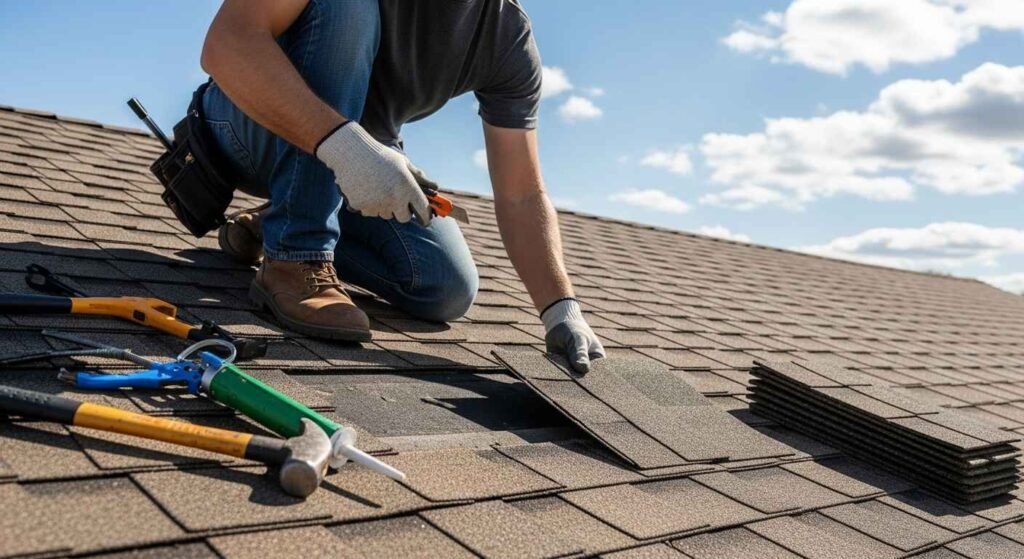
Your roof is the primary shield protecting your home, family, and possessions from the elements. When that shield is compromised, even by a minor issue, the potential for significant damage escalates quickly. Addressing these problems promptly is not just a matter of repair; it’s a crucial part of strategic home maintenance. The U.S. roofing market is a substantial part of the economy, estimated at $24.79 billion in 2025, underscoring the value homeowners place on maintaining this critical asset. With the 20 years of roofing experience at Elite Crown Roofing, we provide a comprehensive overview of roof patching, empowering you to understand when it’s the right solution, how to approach it safely, and when to call in a professional to safeguard your home from above.
What is to Patch a Roof? A First Line of Defense
Roof patching is the process of repairing a small, localized area of a roof to correct an isolated issue, such as a missing shingle, a small puncture, or a cracked sealant. It is a targeted repair designed to stop a leak or prevent one from starting, thereby extending the service life of the existing roof system. Unlike a full repair, which might involve replacing a larger section, or a total replacement, patching is a precise intervention. It serves as an immediate and cost-effective first line of defense against water intrusion, preserving the structural integrity of your home and buying valuable time before more extensive work is needed.
DIY vs. Professional: When Can You Tackle It?
Deciding between a do-it-yourself patch and hiring a professional hinges on three factors: the complexity of the repair, your comfort level with heights, and the type of roofing material. Simple fixes, like replacing a single asphalt shingle on a low-pitch, single-story roof, are often manageable for a skilled DIYer. However, issues involving flashing, steep pitches, or specialized materials like slate or tile typically demand professional expertise. While the average professional roof repair costs around $1,150, attempting a job beyond your skill set can lead to improper repairs, further damage, and significant safety risks, ultimately costing more in the long run.
Is a Patch Right for Your Roof Damage?
Before grabbing a ladder and sealant, it’s essential to determine if a patch is the appropriate solution. Patching is ideal for new or middle-aged roofs with isolated damage. For older roofs nearing the end of their lifespan or those with widespread issues, patching may only be a temporary stopgap that delays an inevitable replacement. A thorough assessment of the damage is the critical first step in making an informed, cost-effective decision.
Understanding Different Types of Roof Damage
Roof damage manifests in various forms. The most common issue is leaks, which affect nearly 6 million homes nationwide and are often the most urgent signal for repair. Other signs include cracked, curled, or missing shingles, which expose the underlayment to UV rays and moisture. Granule loss, visible as dark patches on asphalt shingles or an accumulation of sand-like particles in your gutters, indicates that the shingles are aging and losing their protective layer. Punctures from falling debris, damaged flashing around chimneys and vents, and cracked sealant are also common culprits that are often ideal candidates for patching.
Patching vs. Full Roof Repair vs. Replacement: Making the Decision
The decision to patch, repair, or replace comes down to the scope of the problem and the overall condition of your roof.
- Patching: Best for isolated, minor issues on a roof that is otherwise in good health. Examples include a few missing shingles, a small hole, or sealing a cracked pipe boot.
- Full Repair: Necessary when damage is more extensive but still contained to one section. This could involve replacing a significant area of shingles and underlayment after a tree branch falls.
- Replacement: The only viable option when the roof is past its expected lifespan, shows widespread damage (e.g., more than 30% of the surface is compromised), or has multiple, recurring leaks. While patching might seem cheaper, investing in a full roof replacement, which can run $20,000-$45,000 for an average home, is more economical than paying for continuous, failing patches on an old roof.
Identifying the Source of Your Roof Leak
A water stain on your ceiling marks the end of a leak’s journey, not its beginning. The point where water enters your roof is often far from where it eventually appears inside. Pinpointing the exact source requires careful detective work, as water can travel along rafters and decking before finding a spot to drip through.
The Detective Work: Tracing the Water Intrusion
Start your investigation in the attic on a rainy day or have a helper spray the roof with a garden hose while you look for drips. Begin by checking the underside of the roof deck directly above the interior stain. Look for wet wood, dark stains, or dripping water. If the source isn’t immediately obvious, start your search uphill from the stain, as water flows downward. Follow any water trails along rafters or trusses. Remember that insulation can soak up water, so you may need to carefully move it aside to inspect the wood decking beneath.
Common Leak Culprits to Look For
Leaks most frequently occur where the roof plane is penetrated or interrupted. Be sure to meticulously inspect these common weak points:
- Roof Penetrations: Vents, pipes, and skylights are sealed with “boots” or flashing. These seals can crack, deteriorate, or be installed improperly, creating a direct path for water.
- Flashing: Metal strips installed around chimneys, dormers, and in roof valleys are critical for directing water away. Damaged, rusted, or loose flashing is a primary cause of leaks.
- Damaged Shingles: Cracked, curled, or missing shingles expose the vulnerable underlayment.
- Ice Dams: In colder climates, ice buildup at the eaves can force water back up under the shingles.
- Clogged Gutters: Water that can’t drain properly will back up and seep under the edge of the roof.
Safety First: Essential Precautions for Roof Work
Working on a roof is inherently dangerous. Before you even consider a DIY patch, prioritizing safety is non-negotiable. A fall can result in severe injury, making proper precautions absolutely critical.
Gear Up: Personal Protective Equipment (PPE)
Your personal safety starts with the right gear. Always wear well-fitting, soft-soled boots with excellent grip to prevent slipping. Safety glasses or goggles will protect your eyes from debris, and durable work gloves will protect your hands from rough materials and sharp tools. For steeper roofs, a safety harness properly secured to an anchor point is essential.
Ladder Safety & Working at Heights
Choose a sturdy extension ladder that extends at least three feet above the roofline. Place it on a firm, level surface and ensure it is set at a safe angle (approximately 75 degrees, or a 4:1 ratio of height to base distance). Always maintain three points of contact when climbing—two hands and one foot, or two feet and one hand. When on the roof, be mindful of your footing, walk slowly, and avoid sudden movements. Never work on a roof alone; have a spotter on the ground who can assist in an emergency.
Weather Watch: Timing Your Repair for Optimal Safety and Effectiveness
Never attempt to work on a roof during or immediately after rain, in high winds, or in icy conditions. A wet roof is incredibly slippery and dangerous. Furthermore, most patching materials require a clean, dry surface to adhere and cure properly. Plan your repair for a calm, clear, and dry day to ensure both your safety and the longevity of the patch.
Tools and Materials for a Successful Roof Patch
Having the correct tools and materials on hand before you start is key to an efficient and effective repair. The specific items you need will depend on your roof type and the nature of the damage.
Essential Tools for Any Patching Job
While material-specific tools vary, a basic kit for most patching jobs should include:
- Sturdy extension ladder
- Pry bar or flat bar for removing old shingles and nails
- Hammer and/or roofing nail gun
- Utility knife with extra blades
- Caulking gun for applying sealant
- Trowel or putty knife for spreading roofing cement
- Tape measure
- Chalk line for marking straight cuts
Selecting the Right Patching Materials by Roof Type
Choosing a material that is compatible with your existing roof is crucial for a lasting seal.
- Asphalt Shingles: You will need replacement shingles that match the existing ones, roofing nails (1 ¼ inch), and roofing cement or a high-quality sealant.
- Metal Roofs: Options include polyurethane or butyl sealant for small holes, or a patch made from the same metal type, secured with self-tapping screws with rubber washers. The recent surge in metal roofing demand, which grew 35% in 2024-2025, highlights its durability and the importance of using compatible repair materials.
- Flat Roofs (EPDM, TPO, PVC): Use a dedicated patch kit for your specific membrane type, which typically includes a patch, cleaner/primer, and adhesive or seam tape.
- Wood Shakes/Shingles: Requires replacement shakes, roofing nails, and potentially a sealant designed for wood.
Step-by-Step DIY Roof Patching Guide (General Principles)
While specific techniques vary by material, the fundamental process of patching follows a consistent set of principles.
Preparation: Clearing and Cleaning the Area
Begin by using a stiff brush to clear the damaged area of any leaves, dirt, or loose debris. For a sealant or adhesive to bond properly, the surface must be immaculately clean and completely dry. Use a cleaning agent recommended for your specific roofing material if necessary.
Accessing and Preparing the Damaged Area
This step often involves carefully removing the damaged components. For shingles, this means using a flat bar to gently pry up the surrounding shingles to access and remove the nails holding the damaged one in place. For metal or flat roofs, you may need to trim away any loose or jagged material around the puncture with a utility knife.
Applying the Patch Material
With the area prepped, apply your chosen patch. For a shingle, slide the new one into place and secure it with roofing nails. For a puncture, apply sealant directly or place your patch material over the hole. Always follow the manufacturer’s instructions for application thickness and technique to ensure a proper seal.
Sealing and Finishing for Long-Term Protection
The final step is to ensure all edges and fasteners are completely sealed against water. For shingles, apply a dab of roofing cement over each nail head and under the edges of the overlapping shingles. For other patch types, apply a bead of sealant around the entire perimeter of the patch, using a putty knife to smooth the bead and ensure a watertight finish.
Specific Patching Scenarios: Tackling Common Leaks
Patching Damaged or Missing Asphalt Shingles
To replace a shingle, carefully lift the tabs of the shingles in the row above it and use a flat bar to pry out the nails. Slide out the damaged shingle. Slide the new shingle into position, ensuring its top edge is aligned with its neighbors. Secure it with four roofing nails, then apply roofing cement over the nail heads and press the overlying shingle tabs down firmly.
Repairing Leaks Around Flashing (Chimneys, Skylights, Walls)
Leaks around flashing are often caused by dried or cracked sealant. First, remove the old, brittle sealant with a putty knife. Clean the area thoroughly with a wire brush. Apply a new, continuous bead of high-quality, exterior-grade polyurethane sealant along the seam where the flashing meets the roof and the vertical surface (chimney, wall).
Addressing Leaks in Roof Valleys
Valleys are high-flow areas and require careful attention. If the leak is from a small puncture in metal flashing, clean the area and apply roofing cement, embedding a small piece of matching material into the cement for reinforcement before covering it with another layer. For shingled valleys, damaged shingles must be carefully removed and replaced without compromising the underlying layers.
Fixing Leaks from Cracked Pipe Boots or Roof Vents
The flexible rubber boot around plumbing vents can crack from sun exposure. If the damage is minor, you can clean the boot and apply a generous layer of sealant over the cracks. For more significant damage, it’s best to replace the entire pipe boot, which involves removing surrounding shingles to access and replace the unit.
Patching a Metal Roof
For small holes or loose screws on a metal roof, clean the area and apply a high-quality metal roof sealant. For larger holes, cut a patch from a matching piece of metal that is several inches larger than the hole. Apply a thick bead of sealant around the perimeter of the hole, press the patch firmly into place, and secure it with self-tapping, gasketed screws. Finish by sealing the edges of the patch and the screw heads.
Emergency Patching for Immediate Protection
If a leak occurs during a storm, you may need an immediate, temporary fix. From inside your attic, you can use roofing cement and a piece of plywood or a spare shingle to cover the hole from below. On the exterior, a thick plastic tarp secured with heavy boards or sandbags can cover the damaged area until a permanent repair can be safely made.
After the Patch: Monitoring and Maintenance
A successful patch is not the end of the story. Regularly inspect your repair, especially after heavy rain or storms, to ensure it is holding firm. Proactive maintenance is the best way to prevent future issues. This includes cleaning your gutters twice a year, trimming overhanging tree branches, and conducting a full roof inspection annually. The cost of routine roof maintenance, typically between $120 and $400, is a small investment compared to the cost of repairing extensive water damage.
Conclusion
Patching a roof is a critical skill for any homeowner, serving as a vital tool in the strategic management of your property’s health. By understanding the difference between a minor issue suitable for a patch and widespread damage that requires professional intervention, you can make timely, cost-effective decisions. Whether you’re replacing a single asphalt shingle, sealing flashing, or applying an emergency tarp, the keys to success are a commitment to safety, the use of correct materials, and meticulous preparation. A well-executed patch not only stops a leak but also extends the life of your entire roof system, protecting your investment and providing peace of mind. For any repair that feels beyond your comfort or skill level, or for widespread damage, always consult a qualified roofing professional at Elite Crown Roofing to ensure the long-term integrity of your home’s most important defender.