
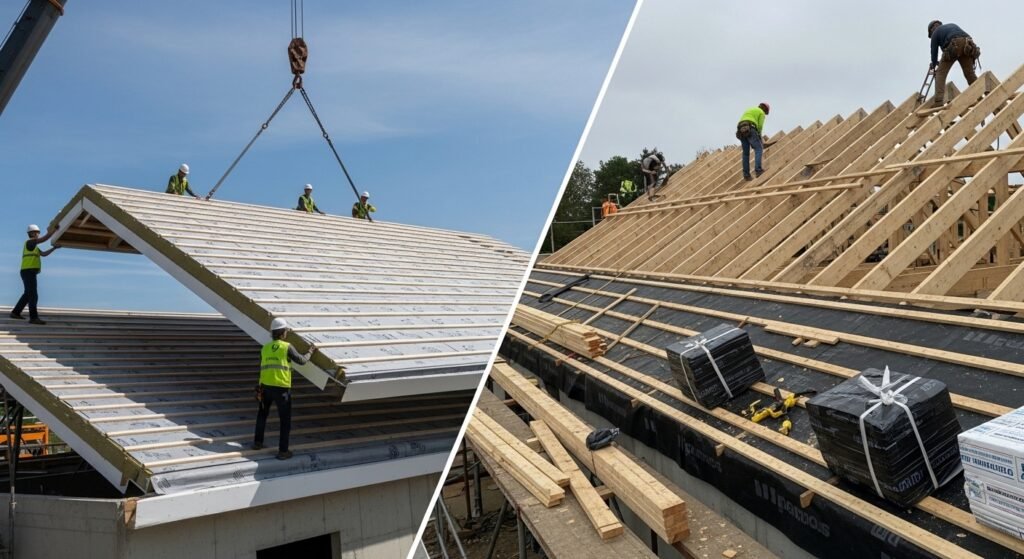
Choosing the right roofing system is one of the most important decisions in residential and commercial construction. The debate between prefab roof vs traditional roof continues to grow as property owners, builders, and developers seek faster installation, long-term durability, and cost efficiency. While both systems serve the same fundamental purpose—protecting a structure from the elements—the way they are designed, built, installed, and maintained differs significantly.
Prefab Roof vs Traditional Roof (Best Answer)
Prefab roofs and traditional roofs offer distinct advantages depending on construction needs. Prefabricated roofs are factory-built, allowing for faster installation, consistent quality, and often lower labor costs, making them ideal for time-sensitive or modular projects. Traditional roofs, constructed entirely on-site, provide greater flexibility in design, customization, and material choice, which can enhance durability and aesthetic appeal for long-term projects. While prefab systems excel in efficiency and cost-effectiveness, traditional roofing remains the go-to for projects requiring tailored solutions and architectural uniqueness. Ultimately, the choice depends on priorities such as speed, budget, and design requirements.
This guide provides a comprehensive comparison between prefabricated roofing systems and traditional stick-built roofing, helping you determine which solution best fits your project based on installation time, cost, durability, maintenance requirements, design flexibility, and long-term performance.
What Is a Prefab Roof System?
A prefab roof, also known as a prefabricated roof, modular roof, or factory-built roofing system, is manufactured off-site in a controlled factory environment. Roof components such as engineered roof panels, roof truss systems, or panelized roof assemblies are precision-built and then transported to the construction site for installation.
Because prefab roofing relies on off-site roof construction, it reduces dependency on weather conditions and minimizes human error. Components arrive ready for assembly, allowing faster and more predictable installation timelines.
Key characteristics of prefab roofing systems include:
- Factory-controlled manufacturing
- Pre-engineered roof assemblies
- Reduced material waste
- Shorter installation timelines
- Consistent quality and tolerances
What Is a Traditional Roof?
A traditional roof—often called a stick-built roof or site-built roofing system—is constructed entirely on-site. Roofing crews assemble the structure piece by piece using rafters, decking, underlayment, and roofing materials such as shingles, tiles, or metal panels.
Traditional roofing has been the industry standard for decades and offers greater flexibility for custom roof designs. However, its quality and performance depend heavily on craftsmanship, weather conditions, and installation time.
Key features of traditional roofing systems include:
- On-site roof framing
- High design flexibility
- Greater labor dependency
- Longer installation timelines
- Increased exposure to weather delays
Installation Time: Prefab Roofing vs Traditional Roofing
One of the most noticeable differences in the prefab roof vs traditional roof comparison is installation speed.
Prefab roofing systems significantly reduce construction time because roof panels or trusses are pre-manufactured. Once delivered, installation often takes days instead of weeks. This efficiency reduces labor costs and shortens project timelines.
Traditional roof installation, on the other hand, requires multiple sequential steps—framing, decking, underlayment, and finishing—each vulnerable to weather delays. Rain, wind, or extreme temperatures can halt progress and extend timelines.
Installation comparison summary:
- Prefab roof installation: faster, predictable, weather-resistant
- Traditional roof installation: slower, labor-intensive, weather-dependent
Roofing Labor Requirements and Efficiency
Prefab roofing systems reduce the need for large on-site labor crews. Because components are designed for assembly, fewer skilled workers are required during installation. This makes prefab roofing especially attractive in regions experiencing labor shortages.
Traditional roofing relies heavily on experienced craftsmen. Errors in framing, alignment, or fastening can compromise roof performance, leading to leaks or structural issues.
In terms of labor efficiency:
- Prefab roofing reduces job-site labor hours
- Traditional roofing requires more manual labor and supervision
Cost Comparison: Prefab Roof vs Traditional Roof
Cost is a major factor in roofing decisions. While prefab roofs may have higher upfront material costs, they often deliver better long-term value.
Prefab roofing cost considerations:
- Reduced labor expenses
- Shorter project duration
- Lower waste and rework costs
- Predictable budgeting
Traditional roofing cost considerations:
- Lower material cost initially
- Higher labor expenses
- Increased risk of delays
- Potential for installation errors
When evaluating roof lifecycle cost analysis, prefab roofing systems often outperform traditional roofs due to reduced maintenance needs and longer service life.
Structural Integrity and Load-Bearing Performance
Prefab roofs are engineered to meet strict structural standards. Factory manufacturing allows for precise load-bearing calculations, including wind uplift resistance, snow load performance, and seismic requirements.
Traditional roofs rely on field-built framing, which can vary in quality. Improper spacing, inconsistent fastening, or framing errors can weaken structural integrity over time.
In high-wind or heavy-snow regions, prefab roofs often provide superior performance due to standardized engineering.
Durability and Weather Resistance
Prefab roofing systems are designed with durability in mind. Factory-built components are tested for environmental stress and manufactured using controlled processes that minimize defects.
Traditional roofs can be equally durable when installed correctly, but they are more vulnerable to inconsistencies caused by weather exposure during construction.
According to the U.S. Department of Energy, properly sealed and engineered roofing systems significantly improve building energy performance and moisture resistance.
Maintenance Requirements: Prefab vs Traditional Roofing
Maintenance plays a critical role in long-term roof performance.
Prefab roofs require regular inspections of panel seams, fasteners, and flashing interfaces. Because prefab systems function as integrated assemblies, issues often appear at connection points.
Traditional roofs typically require more frequent repairs due to individual component aging, such as shingle deterioration or underlayment failure.
Maintenance comparison:
- Prefab roofs: fewer but more specialized inspections
- Traditional roofs: frequent repairs, easier component replacement
Roof Failure Risks and Warning Signs
Both roofing systems can fail if neglected, but failure patterns differ.
Common warning signs include:
- Yellow or grey ceiling stains
- Roof sagging or dips in the ceiling
- Water intrusion near seams or valleys
- Cracking sounds or structural movement
Prefab roofs may experience sudden localized issues if fasteners loosen or load distribution is compromised. Traditional roofs tend to deteriorate gradually over time.
Understanding roof failure risks allows for early intervention and prevents costly structural damage.
Design Flexibility and Architectural Limitations
Design flexibility is one area where traditional roofing excels. Complex roof geometries, custom dormers, and irregular layouts are easier to achieve with stick-built roofing.
Prefab roofing systems require precise planning before manufacturing. Once panels leave the factory, changes become costly or impossible. Projects with highly customized designs may lose prefab efficiency advantages.
However, modern prefab systems continue to improve design adaptability, especially for residential and light commercial buildings.
Transportation and Site Logistics
Prefab roofs require transportation planning. Panel dimensions must comply with highway regulations, and crane access is often necessary for installation.
Traditional roofing materials are easier to transport and stage on-site, making them more suitable for remote or restricted-access locations.
Logistical feasibility should always be evaluated before selecting a prefab roofing system.
Building Code Compliance and Engineering Approval
Prefab roofing systems often require engineer-stamped drawings and pre-approval by local building departments. This upfront process can delay project start but ensures code compliance.
Traditional roofs may require fewer approvals initially, though inspections still apply.
According to FEMA building guidelines, engineered roof systems improve resilience against extreme weather events.
Energy Efficiency and Thermal Performance
Prefab roofing systems often deliver superior thermal efficiency due to precision sealing and consistent insulation integration. Reduced air leakage improves indoor comfort and lowers energy costs.
Traditional roofs may suffer from thermal bridging or uneven insulation if installation quality varies.
Energy-efficient roofing contributes to long-term cost savings and sustainability goals.
Commercial vs Residential Roofing Applications
Prefab roofing systems are widely used in:
- Commercial buildings
- Warehouses
- Industrial facilities
- Multi-family housing
Traditional roofing remains popular for:
- Custom residential homes
- Historic renovations
- Complex architectural projects
Choosing the right system depends on project scale, design complexity, and performance expectations.
Environmental Impact and Sustainability
Prefab roofing reduces material waste through factory optimization and recycling processes. Shorter construction timelines also reduce environmental disruption.
Traditional roofing generates more on-site waste and often requires multiple material deliveries.
For eco-conscious projects, prefab roofing offers measurable sustainability benefits.
Long-Term Value and Return on Investment
When evaluating prefab roof vs traditional roof, long-term value matters more than initial cost. Prefab roofing systems often deliver:
- Longer service life
- Lower maintenance costs
- Fewer installation defects
- Improved structural performance
Traditional roofs remain viable but demand consistent maintenance and skilled labor to achieve similar longevity.
FAQs: Prefab Roof vs Traditional Roof
Is a prefab roof stronger than a traditional roof?
Prefab roofs are often stronger due to engineered design, consistent manufacturing, and tested load performance.
Are prefab roofs more expensive?
Upfront costs may be higher, but long-term savings often offset the initial investment.
Can prefab roofs be customized?
Customization is possible but limited compared to traditional roofing. Design decisions must be finalized early.
Which roof lasts longer?
With proper maintenance, prefab roofs often outlast traditional roofs due to uniform quality and reduced installation errors.
Are prefab roofs suitable for residential homes?
Yes, especially for new construction, modular homes, and modern residential designs.
Final Thoughts: Which Roofing System Is Better?
There is no universal answer in the prefab roof vs traditional roof debate. Each system offers distinct advantages depending on project goals, budget, location, and design complexity.
Prefab roofing systems excel in speed, consistency, structural performance, and long-term value. Traditional roofing remains ideal for custom designs and renovation projects requiring flexibility.
By understanding installation methods, cost implications, maintenance needs, and performance characteristics, you can choose the roofing system that delivers the best outcome for your property—today and for decades to come.