
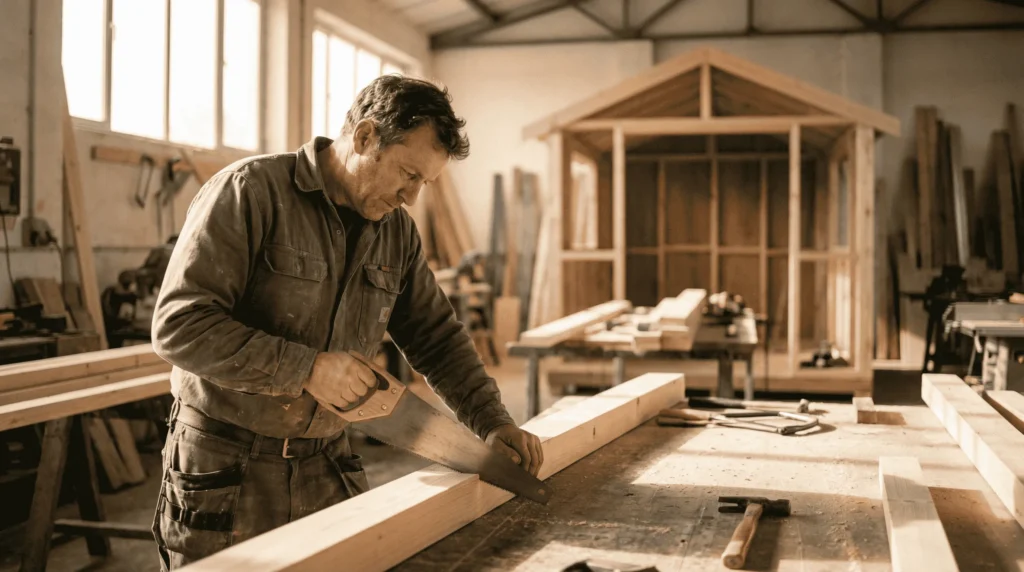
Building a shed roof transforms any outdoor structure from basic storage to a weather-resistant asset that protects your valuable tools, equipment, and materials. Whether you’re constructing a new outbuilding or tackling a roof replacement project on an existing shed, mastering proper roofing techniques ensures decades of reliable protection against rain, snow, and harsh weather conditions.
A shed roof’s simple sloped design makes it one of the most accessible roofing projects for DIY enthusiasts, yet it requires careful attention to structural integrity, waterproofing, and ventilation. According to the Post-Frame Building Handbook, proper roof construction significantly extends building lifespan while preventing costly moisture damage that can compromise your entire structure.
The key to success lies in understanding fundamental principles: adequate slope for water drainage, proper material selection, and systematic installation techniques. Professional roofing contractors know that even small sheds require the same attention to detail as residential projects – shortcuts in planning or execution often lead to leaks, sagging, and premature deterioration.
How to Build a Shed Roof (Best Answer)
To build a shed roof, start by planning the slope and measuring accurately to ensure proper drainage. Install and secure the wall plates, then frame the roof using evenly spaced rafters attached firmly to the structure. Add roof sheathing, followed by underlayment and your chosen roofing material, making sure all edges are sealed. Finish by checking alignment and fastening to ensure the roof is strong, weather-resistant, and long-lasting.
Before diving into construction, you’ll need to gather specific materials, tools, and permits while ensuring your foundation can support the roof load you’re planning to install.
Prerequisites and Materials Needed
Before you begin your project to build shed roof, proper preparation ensures a smooth construction process and professional results. A thorough roof inspection of your existing structure helps identify any underlying issues that could compromise your new roof’s performance.
Essential Materials:
- Lumber: 2×6 or 2×8 rafters, depending on span requirements
- Roofing materials: Asphalt shingles, metal panels, or membrane roofing
- Underlayment: Felt paper or synthetic moisture barrier
- Fasteners: Galvanized nails, screws, and metal connectors
- Flashing: For weatherproofing joints and transitions
Required Tools:
- Circular saw and framing square
- Hammer and nail gun
- Level and measuring tape
- Safety equipment (harnesses, non-slip shoes)
Prerequisites: Your shed’s walls must be structurally sound and properly squared. Professional roofing services recommend verifying load-bearing capacity, especially for spans exceeding 12 feet. According to the Post-Frame Building Handbook, proper material selection based on local snow loads and wind conditions is critical for long-term performance.
Having permits in hand and understanding local building codes prevents costly delays. With materials gathered and prerequisites met, you’re ready to move into the crucial planning and design phase.
Step 1: Planning and Design
Successful shed roofing begins with thorough planning that addresses both structural requirements and local building codes. Start by determining your roof’s pitch, which typically ranges from 1/4 inch to 1 inch per foot of horizontal run for proper water drainage. A steeper pitch provides better water runoff but requires more materials and labor.
Consider your local climate conditions when planning. Areas with heavy snow loads require stronger structural support, while regions with frequent storms benefit from enhanced wind resistance features. Check with your local building department about permit requirements – most jurisdictions require permits for structures over a certain size.
The design phase should account for door and window placement, as these openings affect your roof’s structural integrity. Plan your roof overhang carefully; typically 6-12 inches provides adequate protection from the elements while maintaining proportional aesthetics.
Document your measurements and create a simple sketch showing roof dimensions, pitch angle, and material placement. This planning prevents costly mistakes during construction and ensures you order the correct quantity of materials. Professional roofing services can provide valuable guidance during this critical planning phase, especially for complex designs or challenging installations.
Choosing the Right Materials
Material selection forms the foundation of successful shed roof installation and directly impacts your roof’s longevity, performance, and cost-effectiveness. The right choices ensure your investment withstands decades of weather exposure while maintaining structural integrity.
Roofing materials fall into three primary categories: asphalt shingles, metal roofing, and alternative options like corrugated panels. Asphalt shingles remain the most popular choice due to their affordability and ease of installation, typically lasting 20-25 years with proper maintenance. Metal roofing, while requiring higher upfront investment, offers superior durability and can last 40-50 years with minimal upkeep.
For structural components, pressure-treated lumber provides essential moisture resistance for rafters and framework. Standard 2×6 or 2×8 rafters work for most shed applications, though larger spans may require engineered lumber. Quality plywood or OSB sheathing creates the crucial substrate for your roofing material.
Professional roofing services often recommend matching your shed’s materials to your home’s existing roof for aesthetic continuity. However, budget-conscious builders can achieve excellent results with basic asphalt shingles and proper underlayment.
Weather conditions in your area significantly influence material choices – areas with heavy snow loads require stronger framing, while regions with intense UV exposure benefit from reflective metal roofing or high-quality shingles with UV protection.
Step 2: Constructing the Roof Framework
Building a sturdy roof framework forms the structural backbone that will support your roof shingles and weatherproofing materials. Start by cutting your rafters to the calculated length, ensuring each piece matches your predetermined pitch angle. Most shed roofs use 2×6 or 2×8 lumber spaced 16 to 24 inches on center, depending on your local snow load requirements.
Position the first rafter at each end of your shed, checking for square and level before securing. Use a chalk line to mark consistent spacing intervals across your top plate, then install remaining rafters with galvanized nails or structural screws. Each rafter should sit flush against the top plate and extend beyond the wall to create your desired overhang.
Proper rafter alignment prevents future sagging and ensures even weight distribution. Double-check measurements as you work – even small inconsistencies compound across the roof span. For sheds wider than 12 feet, consider adding collar ties or ridge supports for additional stability. This solid framework preparation sets the stage for seamless roof installation of your sheathing layer.
Step 3: Installing the Roof Sheathing
With your framework complete, roof sheathing installation creates the critical foundation that will support your chosen roofing material. This structural layer transforms your rafters into a unified surface ready for weatherproofing.
Plywood vs. OSB Selection
Choose between 7/16-inch OSB or 1/2-inch plywood for your sheathing material. Plywood offers superior moisture resistance, making it ideal if you’re planning a metal roof installation that requires enhanced durability. OSB provides cost savings while maintaining adequate structural performance for most shed applications.
Installation Process
Start sheathing from the bottom edge, ensuring each panel spans at least three rafters for optimal load distribution. Leave 1/8-inch gaps between panels to accommodate thermal expansion. Secure panels with 8d nails every 6 inches along edges and 12 inches in the field areas.
Position panels perpendicular to your rafters with staggered joints between rows. This creates a stronger, more stable surface that prevents weak points in your roof installation. Check that each panel sits flush against the rafters before fastening.
Quality Verification
Walk the completed sheathing to identify any loose panels or protruding nails that could compromise your roofing material installation. Your properly installed sheathing now provides the solid foundation necessary for the final roofing application.
Step 4: Applying the Roofing Material
With your sheathing secured and underlayment in place, selecting and installing the right roofing materials represents the final protective barrier for your shed. The material choice significantly impacts both durability and installation complexity.
Asphalt shingles remain the most popular option for shed roofs due to their affordability and straightforward installation process. Start at the bottom edge of the roof, working your way up in overlapping rows. Each shingle should overlap the one below by at least 6 inches to ensure proper water shedding. For professional-grade installation techniques, consider consulting professional roofing services for guidance on complex projects.
Metal roofing panels offer superior longevity but require precise measurements and specialized fasteners. Install panels perpendicular to the roof slope, ensuring each panel overlaps the previous one by at least one corrugation. According to the Post-Frame Building Handbook, proper fastener spacing prevents wind uplift and ensures structural integrity.
Regardless of material choice, proper installation directly impacts your roof’s performance and your need for future roof repair services. With your roofing material secured, ensuring adequate airflow becomes the next critical consideration.
Ensuring Proper Roof Ventilation
Proper roof ventilation is critical for preventing moisture buildup, reducing energy costs, and extending your shed’s lifespan. Without adequate airflow, trapped moisture can lead to costly shed roof repair issues, including rot, mold, and structural damage that could compromise your investment.
For shed roofs, the most effective ventilation approach combines soffit vents at the low end with ridge vents or gable vents at the high end, creating natural airflow that draws cool air in and pushes warm, moist air out. Install soffit vents every 4-6 feet along the eaves, ensuring each vent provides at least 1 square foot of ventilation per 150 square feet of attic space.
Gable vents offer an excellent alternative for shed roofs, particularly when installed near the peak on opposite ends. These provide cross-ventilation that effectively manages temperature and humidity levels. For optimal performance, position vents to take advantage of prevailing wind patterns in your area.
Don’t overlook continuous ridge venting if your shed design allows it. This system provides consistent airflow along the entire roof peak, making it particularly effective for larger shed structures. Professional roof ventilation solutions can help determine the best configuration for your specific climate and shed dimensions, ensuring optimal performance while preventing future ventilation-related problems.
Conventional Wisdom vs. Reality: Common Mistakes
Building a shed roof seems straightforward, but several misconceptions lead homeowners astray. One persistent myth suggests that shed roofs don’t need proper drainage systems because of their simple design. In reality, inadequate drainage causes 40% of premature shed roof failures, making proper guttering essential even for basic structures.
Another common error involves underlayment shortcuts. Many builders assume tar paper provides sufficient moisture protection, but modern synthetic underlayments offer superior durability and weather resistance. This becomes critical when considering future shed roof replacement costs, as proper materials extend lifespan significantly.
Ventilation neglect represents perhaps the most costly mistake. Without adequate airflow, moisture accumulates beneath roofing materials, leading to rot and structural damage. Professional roof ventilation solutions prevent these issues before they become expensive repairs.
Flashing installation errors also plague DIY projects. Improper sealing around roof penetrations creates entry points for water damage. When problems arise, experienced contractors providing professional roofing services can identify and correct these vulnerabilities.
Finally, many builders underestimate local building codes. What works in one region may violate regulations elsewhere, potentially affecting insurance coverage and resale value.
Cost Considerations and Budgeting
Building a shed roof involves several cost variables that can significantly impact your total project budget. Material costs typically account for 60-70% of the total expense, with lumber, roofing materials, and hardware being the primary drivers. A basic gable roof for a 10×12 shed might cost $300-600 in materials, while more complex designs can easily double that amount.
Labor considerations play a crucial role in budgeting decisions. While DIY installation saves on labor costs, mistakes can prove expensive. Professional roofing services often provide warranties and expertise that justify the additional expense, particularly for complex roof designs or when dealing with structural modifications.
Hidden costs frequently catch homeowners off-guard. Permit fees, tool rentals, and potential structural reinforcements can add 20-30% to initial estimates. Factor in disposal fees for old materials if you’re replacing an existing roof, and consider whether your project requires roof installation by licensed professionals to meet local building codes.
Creating a detailed budget with a 15-20% contingency fund helps manage unexpected expenses. Compare material costs across suppliers, as prices can vary significantly for identical products, especially for specialty items like roof ventilation solutions.
Key Takeaways
Building a successful shed roof requires careful attention to proper planning, material selection, and construction techniques. The foundation of any quality shed roof lies in accurate measurements, appropriate rafter spacing, and selecting materials that match your local climate conditions. Remember that a 1/4-inch slope per foot provides adequate drainage for most applications, while proper ventilation prevents moisture buildup that leads to structural damage.
Safety should never be compromised during construction—always use proper fall protection and work with a partner when possible. When complex issues arise, such as structural concerns or extensive roof repair needs, don’t hesitate to consult professional roofing services for guidance. Regular maintenance, including annual inspections and prompt attention to minor issues, will extend your shed roof’s lifespan significantly.
The investment in quality materials and proper construction techniques pays dividends through decades of reliable protection. Whether you’re building a simple storage shed or a more complex structure, following these proven methods ensures your roof will withstand the elements and serve its purpose effectively. Take pride in your craftsmanship—a well-built shed roof is both functional and a testament to your building skills.