
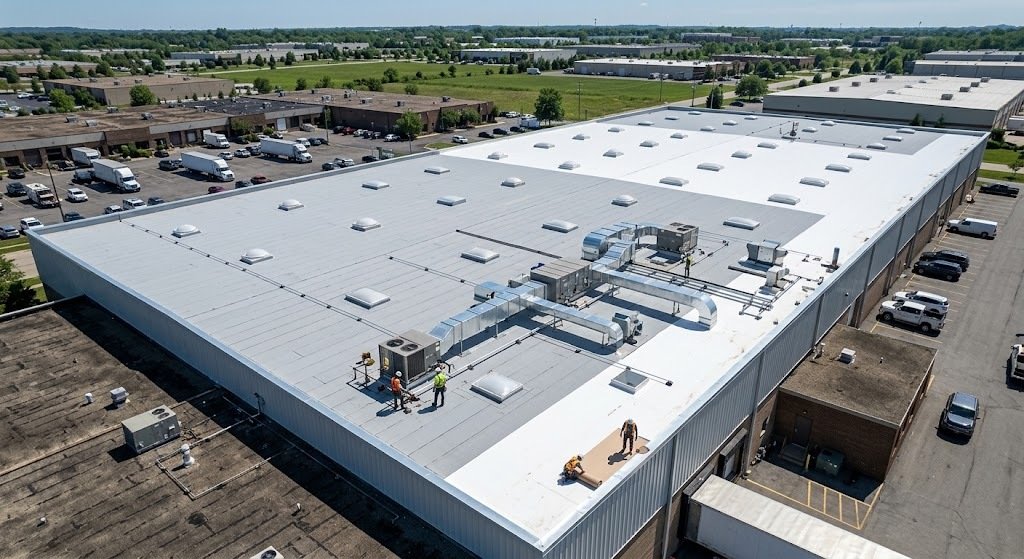
Installing a new flat roof for commercial space is a significant investment that can affect a building’s energy efficiency, protection, operating costs, and long-term maintenance. Whether you’re constructing a new office, retail property, warehouse, restaurant, or other commercial building, selecting the right commercial flat roof requires more than choosing a roofing material. Drainage, insulation, installation methods, budget, durability, and future maintenance all need to be considered.
A well-designed flat roof for commercial building applications can provide dependable weather protection and make efficient use of the available roof area. However, the best roofing system depends on the building’s structure, climate, intended use, and budget. Here are 10 important things to consider before installing a new commercial flat roof.
1. Understand Your Commercial Building’s Roofing Requirements
Before selecting a roofing system, evaluate the building itself. A new commercial roof should be designed around the structure, local weather conditions, roof size, drainage requirements, equipment placed on the roof, and expected building use.
Commercial properties often have rooftop HVAC equipment, vents, skylights, pipes, solar equipment, and maintenance access points. Each penetration or piece of equipment can affect the roofing design.
The roof should also be evaluated for:
- Structural capacity
- Existing roof condition
- Roof slope
- Drainage requirements
- Insulation needs
- Rooftop equipment
- Local building requirements
- Expected foot traffic
- Severe weather exposure
Planning these details before commercial roof installation can help reduce costly modifications later.
Why Roof Design Matters
Although commonly called “flat roofs,” most commercial flat roofing systems are designed with a slight slope that allows water to move toward drains or other drainage points.
A properly designed roof should prevent standing water from remaining on the membrane for extended periods.
2. Choose the Right Commercial Flat Roofing System
One of the most important decisions is choosing the appropriate commercial roofing system. Different materials have different installation requirements, costs, durability, and performance characteristics.
TPO Roofing
TPO, or thermoplastic polyolefin, is a popular single-ply roofing membrane used on commercial buildings. It is available in large sheets that can reduce the number of seams across a roof.
TPO roofing is often selected for its durability, reflective properties, and relatively straightforward installation.
EPDM Roofing
EPDM is a synthetic rubber roofing membrane commonly used for low-slope and flat commercial roofs. It has a long history of use in commercial roofing and is known for flexibility and weather resistance.
EPDM can be particularly suitable for buildings where a durable membrane system is required.
PVC Roofing
PVC roofing is another single-ply membrane option. It is known for its resistance to moisture and certain chemicals, making it useful for specific commercial environments.
Modified Bitumen Roofing
Modified bitumen is an asphalt-based roofing system designed for low-slope applications. It can provide a multi-layer roofing solution with good durability when properly installed.
Built-Up Roofing
Built-up roofing, often called BUR, uses multiple layers of roofing materials. This traditional approach can provide a robust roofing assembly, although installation can be more involved than some single-ply systems.
3. Understand the New Commercial Flat Roof Cost
The commercial flat roof cost can vary substantially from one building to another. There is no single price that applies to every project.
The total cost can be affected by:
- Roof size
- Roofing material
- Labor
- Roof accessibility
- Existing roof removal
- Insulation
- Drainage improvements
- Flashing
- Roof penetrations
- Structural repairs
- Membrane thickness
- Installation method
- Local labor rates
A small commercial building with an uncomplicated roof may require a very different budget than a large facility with multiple rooftop systems and drainage challenges.
Don’t Focus Only on Initial Price
The cheapest roofing system is not always the most economical option over the building’s lifetime.
When comparing proposals, consider:
- Expected service life
- Maintenance requirements
- Repair costs
- Energy performance
- Warranty coverage
- Installation quality
- Replacement frequency
A slightly higher initial investment can potentially provide better long-term value if the roofing system is properly selected and maintained.
4. Inspect the Existing Roof Structure
If you’re replacing an existing roof, the substrate and underlying structure should be evaluated before installing a new system.
A roofing contractor may inspect the decking, insulation, flashing, drainage components, and structural elements to determine whether repairs are required.
Why This Inspection Is Important
Installing a new membrane over damaged or wet materials can create problems later. Hidden moisture, deteriorated decking, or structural deficiencies may compromise the performance of the new roofing system.
A thorough inspection helps determine whether the project requires:
- Partial roof repairs
- Complete roof removal
- New insulation
- Deck replacement
- Drainage improvements
- Flashing replacement
This step can make the commercial flat roof installation more predictable and reduce unexpected problems during construction.
5. Don’t Overlook Flat Roof Drainage
Flat roof drainage is one of the most important considerations when designing a commercial roofing system.
Water must have an effective path away from the roof. Depending on the building design, drainage may include:
- Internal roof drains
- Scuppers
- Gutters
- Downspouts
- Tapered insulation
- Secondary drainage systems
Why Proper Drainage Matters
Standing water can place additional stress on the roofing system and may contribute to membrane deterioration, leaks, and other problems over time.
A properly designed commercial roof drainage system should account for the roof’s size, slope, local rainfall, and applicable building requirements.
Regularly clearing drains and removing debris is also an important part of flat roof maintenance.
6. Choose the Right Commercial Roof Insulation
Roof insulation plays an important role in the performance of a commercial building.
Appropriate commercial roof insulation can help control heat transfer between the building interior and exterior. The correct insulation type and thickness depend on the building design, climate, energy requirements, and applicable codes.
Benefits of Proper Roof Insulation
A well-designed insulation assembly may help:
- Improve indoor comfort
- Reduce heating and cooling demand
- Improve energy efficiency
- Reduce temperature fluctuations
- Protect the roofing assembly
Insulation should be considered during the initial roof design rather than treated as an afterthought.
7. Understand the Commercial Flat Roof Installation Process
The commercial flat roof installation process varies depending on the roofing system and building conditions.
However, a typical project may involve several stages.
Roof Preparation
The contractor prepares the existing roof surface or substrate. Damaged areas may need to be repaired or replaced.
Insulation Installation
Insulation boards or other approved insulation materials are installed according to the roof design.
Membrane Installation
The selected roofing membrane or material is installed across the roof surface.
Seam Treatment
Depending on the system, seams may be mechanically fastened, adhered, or heat welded.
Flashing Installation
Flashing is installed around roof edges, penetrations, curbs, walls, drains, and other vulnerable areas.
Final Inspection
The completed roof should be inspected to identify installation defects, damaged materials, drainage issues, or other concerns.
8. Consider Durability and Commercial Roof Lifespan
The commercial roof lifespan depends on the roofing material, installation quality, weather exposure, maintenance, building use, and other factors.
A high-quality roofing system can provide many years of service when properly installed and maintained. However, even durable materials can experience premature problems if installation is poor or maintenance is neglected.
Factors That Affect Roof Lifespan
Important factors include:
- Quality of roofing materials
- Installation workmanship
- UV exposure
- Temperature fluctuations
- Severe weather
- Ponding water
- Rooftop traffic
- Maintenance
- Drainage
- Mechanical damage
Choosing a roofing system based only on its advertised lifespan can be misleading. The entire roofing assembly and maintenance plan should be considered.
9. Plan for Flat Roof Maintenance
A new roof still requires regular care. Commercial roof maintenance helps identify minor problems before they become expensive repairs.
Routine inspections should look for:
- Damaged membrane
- Loose flashing
- Open seams
- Ponding water
- Blocked drains
- Damaged insulation
- Punctures
- Cracks
- Failed sealants
- Debris accumulation
Schedule Professional Roof Inspections
Professional inspections can be especially useful after major storms or severe weather events.
Early detection can make it easier to repair small issues before water reaches insulation, decking, or interior areas of the building.
10. Work With an Experienced Commercial Roofing Contractor
The quality of the installation can be just as important as the roofing material itself.
An experienced commercial roofing contractor can evaluate the building, recommend appropriate systems, address drainage requirements, install flashing correctly, and provide a maintenance strategy.
Questions to Ask a Roofing Contractor
Before hiring a contractor, consider asking:
- What commercial roofing systems do you install?
- Which system is suitable for this building?
- What insulation do you recommend?
- How will the roof handle drainage?
- How will rooftop equipment be accommodated?
- What warranty is available?
- How long is the expected installation?
- How will the existing roof be prepared?
- What maintenance is recommended?
- Can you provide references for similar commercial projects?
Obtaining multiple detailed proposals can also help you compare materials, warranties, installation methods, and overall project costs.
Flat Roof Waterproofing and Leak Prevention
Flat roof waterproofing is an important part of protecting a commercial property from moisture intrusion. Roofing membranes, seams, flashing, penetrations, and drainage systems must work together to keep water out.
Areas around HVAC units, vents, skylights, pipes, parapet walls, and roof edges require particular attention because they can create potential leak points.
Preventing Commercial Roof Leaks
Businesses can reduce the risk of leaks by:
- Keeping drains clear
- Scheduling regular inspections
- Repairing membrane damage promptly
- Checking flashing
- Limiting unnecessary roof traffic
- Maintaining rooftop equipment
- Addressing ponding water
- Keeping the roof free of damaging debris
When Is Commercial Roof Replacement Necessary?
A commercial roof replacement may be necessary when the existing roofing system has widespread deterioration, recurring leaks, extensive water damage, or has reached the end of its useful service life.
However, replacement isn’t always the only option. Depending on the condition of the existing system, restoration or targeted repairs may be possible.
A professional roof assessment can help determine the most appropriate approach.
How to Choose the Best Flat Roof System for a Commercial Building
The best flat roof system for a commercial building depends on the property’s specific requirements.
Consider these factors before making a decision:
- Building location
- Climate
- Roof size
- Budget
- Expected lifespan
- Energy requirements
- Drainage
- Rooftop equipment
- Maintenance expectations
- Warranty
- Contractor experience
For example, a building exposed to significant sunlight may benefit from a reflective roofing system, while a property with specific chemical exposure may require a membrane designed for that environment.
There is no universal roofing system that is ideal for every commercial property.
Frequently Asked Questions
The cost depends on roof size, material, labor, insulation, existing roof condition, drainage, accessibility, and installation requirements. A professional inspection and detailed proposal are the best ways to determine the actual project cost.
The best system depends on the building’s climate, budget, energy requirements, roof design, and intended use. TPO, EPDM, PVC, modified bitumen, and built-up roofing are common options for commercial applications.
The lifespan varies according to the roofing system, installation quality, climate, maintenance, and exposure. Proper installation and regular inspections can help maximize the service life of a commercial roof.
Neither is automatically better for every property. TPO and EPDM have different characteristics, and the appropriate choice depends on climate, building requirements, budget, installation conditions, and the owner’s priorities.
Regular inspections are recommended to identify drainage problems, membrane damage, flashing issues, and other developing concerns. Additional inspections after severe weather can also be beneficial
Effective drainage helps move rainwater away from the roof surface and reduces prolonged ponding. Proper slope, drains, scuppers, gutters, and maintenance all contribute to effective commercial roof drainage.
Final Thoughts
Installing a new flat roof for commercial space requires careful planning rather than simply choosing the least expensive roofing material. The right system should match the building’s structure, climate, drainage requirements, insulation needs, budget, and long-term maintenance expectations.
Whether you choose TPO, EPDM, PVC, modified bitumen, or built-up roofing, proper installation is essential. A qualified commercial roofing contractor can evaluate the property, explain your options, provide a detailed estimate, and develop a roofing system designed for long-term performance.
By considering commercial flat roof cost, roofing materials, installation, drainage, insulation, waterproofing, lifespan, and maintenance before construction begins, property owners can make a more informed decision and protect their investment for years to come.