
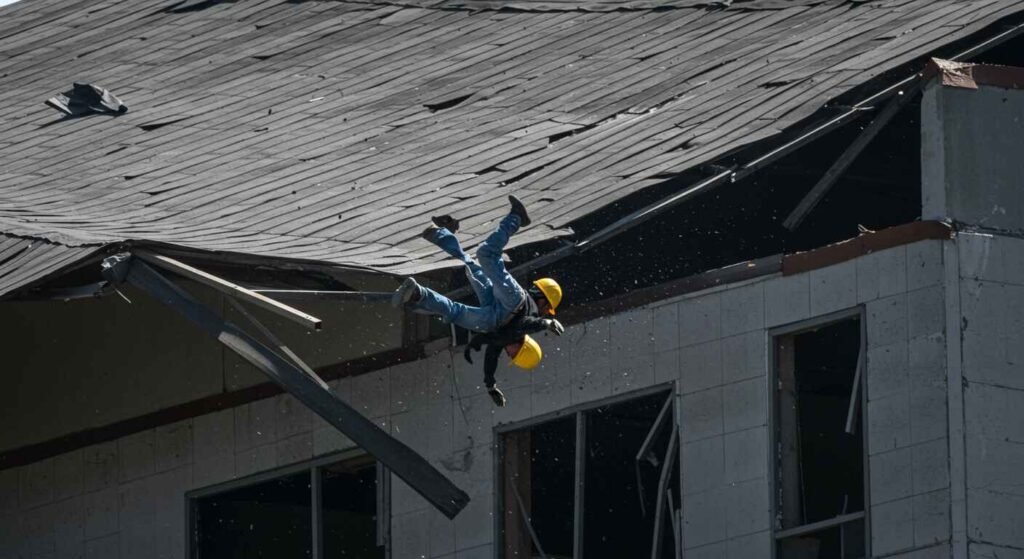
A roofer falling through your commercial roof is a property owner’s worst nightmare. The sound of cracking wood or metal, the sight of a breach in your building’s envelope, and, most importantly, the well-being of an injured worker create a chaotic and high-stakes situation.
In the immediate aftermath, your actions are critical. This guide will walk you through exactly what to do, who is responsible, how insurance comes into play, and, most importantly, how to prevent such a devastating accident from happening in the first place.
5-Step Emergency Response Plan after Roofer Falls Through Your Commercial Roof
When a fall occurs, panic is a natural reaction. Focus on following these five steps methodically to ensure the safety of all involved and to protect your legal and financial interests.
- Call 911 Immediately. This is the absolute first step. Clearly tell the dispatcher it is a workplace fall from a roof. Provide the exact address, the specific location on the roof where the fall occurred (e.g., “the northwest corner over the warehouse”), and the number of people injured. Do not hang up until the dispatcher has all the information they need.
- Do Not Move the Injured Person. Unless the person is in immediate, life-threatening danger (e.g., from fire or electrical hazard), you must not move them. Moving a person with potential spinal or internal injuries can drastically worsen their condition. Wait for trained paramedics to arrive and handle the extraction.
- Secure the Area and Preserve the Scene. Prevent other employees, tenants, or bystanders from entering the area below the breach. Falling debris and further structural instability pose a significant risk. This also helps preserve the accident scene for the official investigation that will follow. Once the area is secure, carefully inspect the interior space below for signs of stress or damage, such as the ceiling collapse warning signs you should never ignore.
- Notify the Roofing Foreman or Supervisor. The injured worker’s employer—the roofing contractor—must be informed immediately. The foreman will know the crew, may have specific safety training, and can assist with accounting for all personnel.
- Document Everything, but Be Discreet. Once the immediate danger is managed, start documenting. Take clear, wide-angle, and close-up photos and videos of the hole in the roof, the debris on the floor, and the general area. This visual evidence is crucial for insurance and any potential legal proceedings. However, be respectful and avoid photographing the injured worker receiving medical care.
Understanding Liability: Who is Legally and Financially Responsible?
Understanding the nuances of commercial liability is complex, and resources from the National Association of Insurance Commissioners (NAIC) can help clarify these regulations. This is the core question that worries every property owner. The answer generally depends on who controlled the work environment and why the fall happened.
The General Rule: The Contractor is Liable
In the vast majority of cases, the commercial roofing contractor bears primary responsibility for their employees. This is established through two key types of insurance that reputable contractors are required to carry:
- Workers’ Compensation Insurance: This is a no-fault system. It covers the medical expenses, rehabilitation costs, and a portion of lost wages for the injured roofer, regardless of who was at fault for the fall. In exchange for this coverage, the employee typically gives up the right to sue their employer for negligence. This protects the contractor from devastating lawsuits and ensures the worker gets care.
- General Liability Insurance: This policy covers third-party property damage and bodily injury. In this scenario, it should cover the cost of repairing the damage to your roof and building interior caused by the fall.
The most crucial step is to hire a reputable, fully insured contractor who prioritizes safety, a commitment often formalized in a comprehensive commercial roof maintenance agreement.
The Exceptions: When Liability Can Shift to the Property Owner
You could be held partially or fully liable if your actions or negligence contributed to the accident. Key exceptions include:
- Knowledge of Hidden Hazards: You could be found negligent if you knew about a structural weakness but failed to disclose it, which is why a proactive roof maintenance program is essential for identifying these risks early.
- Hiring an Uninsured or Unlicensed Contractor: If you chose a contractor who lacked proper workers’ comp and general liability insurance to save money, the liability shield disappears. You could be held directly responsible for all medical bills, lost wages, and repair costs. Your own insurance company may even deny coverage for the claim.
- Acting as the “Controlling Contractor”: If you, the property owner, directly hire and manage the individual roofers (instead of a single contracting company) and dictate their daily work methods and safety procedures, you may be deemed the “employer” under OSHA guidelines. This places full liability for workplace safety on your shoulders.
Navigating the Complex Insurance Claims Process
A roofer’s fall triggers multiple insurance policies. Understanding how they interact is key to a smooth financial recovery.
- The Contractor’s Insurance is Primary: The roofing company should immediately file claims with their workers’ comp carrier (for the injury) and their general liability carrier (for your property damage). You should request a copy of their Certificate of Insurance (COI) at the start of the project and verify its validity.
- Your Commercial Property Insurance Comes Second: You must also file a claim with your own insurance company. Your policy may cover aspects the contractor’s policy does not, such as:
- Water damage to inventory, equipment, or the building interior.
- Business interruption losses if the damage forces you to close or limit operations.
- Legal defense costs if you are sued.
Your insurer will then communicate with the contractor’s insurer in a process called “subrogation” to determine ultimate financial responsibility.
The Critical Role of OSHA
The Occupational Safety and Health Administration (OSHA) will likely open an investigation into the fall. This is a standard procedure for serious workplace accidents. They will inspect the site, interview witnesses, and review company safety records. The goal is to determine the root cause of the accident—was it a lack of fall protection, improper training, or an unsafe structure? OSHA can issue significant fines and citations to the roofing contractor for safety violations. While this process can be stressful, the official OSHA report can also be valuable evidence in determining liability.
Proactive Prevention: Your Best Defense is a Good Offense
The best way to handle a roofer’s fall is to prevent it from ever happening. Your due diligence before hiring a contractor is your most powerful tool, and this starts with a thorough understanding of your roof’s condition through a consistent comprehensive roof maintenance program.
- Vet Your Contractor Meticulously: Never hire a contractor based on price alone.
- Always get a Certificate of Insurance (COI): Ensure it shows adequate levels of workers’ comp and general liability insurance (at least $1 million per occurrence is standard). Don’t just take the paper; call the insurance provider to verify the policy is active.
- Check their Safety Record: Ask about their Experience Modification Rate (EMR)—a metric below 1.0 indicates a better-than-average safety record. Ask if they hold regular “Safety Days” and provide formal fall protection training.
- Get a Solid Contract: Your contract with the roofer is a critical safety document. It must include:
- A clause stating the contractor is an independent entity, responsible for its workers and their safety.
- An indemnification (or “hold harmless”) clause, which states the contractor will cover costs and defend you if a claim arises from their work.
- Proof that the contractor will comply with all applicable safety regulations, including OSHA standards.
- Disclose All Known Hazards in Writing: Before work begins, provide the contractor with all existing roof reports, plans, and a written statement detailing any known issues or weak spots on the roof. This creates a paper trail that protects you from “hidden hazard” liability claims.
Frequently Asked Questions (FAQs)
Q: What if the contractor doesn’t have insurance?
A: This is a severe situation. You could be held personally liable for all costs. Your own insurance may provide some coverage, but you will likely face significant out-of-pocket expenses and potential lawsuits. This is why verifying insurance before any work begins is non-negotiable.
Q: Am I responsible if I had no idea the roof was weak?
A: Generally, no. Roofing professionals are considered experts who are trained to assess a roof’s integrity before walking on it. They are expected to conduct their own preliminary inspection. Liability typically requires proof that you knew about and concealed a hazard.
Q: Should I file with my insurance if the contractor is insured?
A: Yes, absolutely. Notify your insurance carrier immediately. They have a duty to defend your interests and can manage the complex communications with the contractor’s insurer, ensuring all aspects of the damage are covered.
Q: What about damage to my business equipment or inventory inside?
A: This should be covered under your commercial property insurance policy. Document all damaged items with photos and receipts and include them in your claim.
In conclusion, while a roofer falling through your roof is a traumatic event, a prepared property owner who has hired a reputable, insured contractor can navigate the crisis. By focusing first on human safety, then on proper documentation and leveraging professional insurance, you can protect your people, your property, and your financial future.