
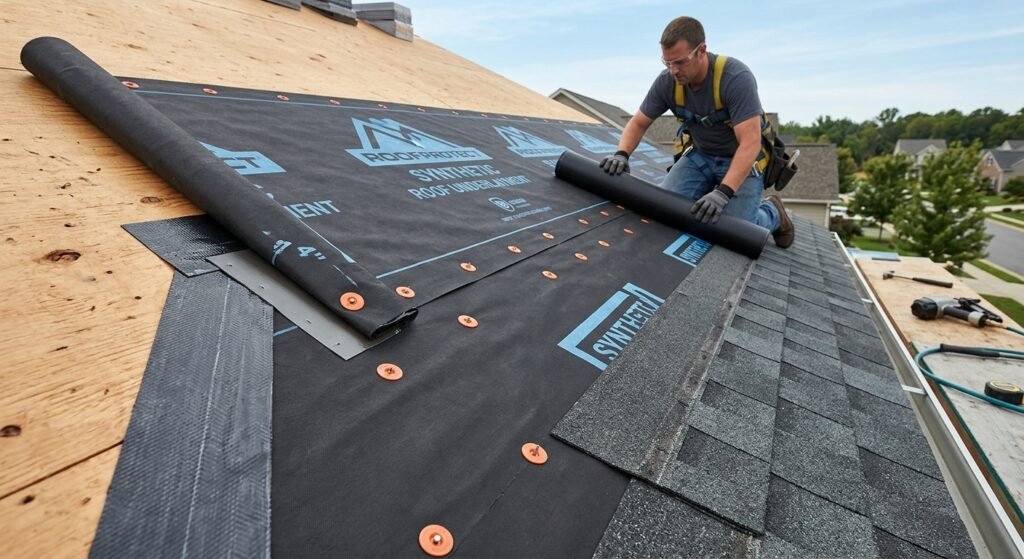
Choosing the best roof underlayment for asphalt shingles is an important part of building a durable roofing system. Although asphalt shingles provide the roof’s primary weather-resistant surface, underlayment creates an additional layer of protection between the shingles and roof deck. The right material can help protect against moisture, wind-driven rain, and other weather conditions while supporting proper shingle installation.
Synthetic underlayment, asphalt-saturated felt, rubberized asphalt, and specialized membranes all have different strengths. Understanding their benefits, limitations, and installation requirements can help homeowners make a better decision for their roofing project.
What Is Roof Underlayment and Why Does It Matter?
Roof underlayment is a protective layer installed over the roof deck and beneath the shingles. It acts as a secondary barrier against moisture and helps protect the decking if water gets beneath the shingles.
A properly installed underlayment can help:
- Protect the roof deck from moisture
- Provide additional weather protection
- Reduce the risk of water reaching the decking
- Protect the roof during portions of the installation process
- Support the overall performance of an asphalt shingle roofing system
Underlayment is only one component of a complete roofing system. Flashing, shingles, ventilation, drip edges, and proper installation all contribute to long-term roof performance.
The National Roofing Contractors Association (NRCA) provides professional roofing guidance and resources covering roofing systems and installation practices.
What Is the Best Roof Underlayment for Asphalt Shingles?
There is no single underlayment that is automatically best for every asphalt shingle roof. The right choice depends on the roof design, local weather, material specifications, budget, and installation requirements.
1. Synthetic Roof Underlayment
Synthetic underlayment has become a popular alternative to traditional roofing felt. It is generally lightweight, tear-resistant, and available in large rolls that can make installation more efficient.
Many synthetic products also provide strong moisture resistance and are designed to remain stable during roofing installation. However, performance varies between products, so contractors should follow the manufacturer’s specifications for fastening, exposure, and installation.
2. Asphalt-Saturated Felt
Asphalt-saturated felt is a traditional underlayment material that has been used beneath asphalt shingles for many years.
Its advantages include familiarity, availability, and generally lower material costs. However, felt can be heavier and may be more susceptible to tearing or wrinkling during handling than some synthetic products.
3. Rubberized Asphalt Underlayment
Rubberized asphalt membranes can provide strong moisture protection and flexibility. Some products are designed for areas where additional waterproofing is desirable.
These materials are often used in specific portions of roofing systems rather than necessarily covering every square foot of a roof. Installation should always follow product-specific instructions.
4. Self-Adhering Underlayment
Self-adhering or peel-and-stick membranes use an adhesive backing rather than relying entirely on mechanical fasteners.
They can be useful around vulnerable areas such as valleys, eaves, and roof penetrations, depending on the roofing system and applicable requirements.
5. Ice and Water Protection
Ice and water protection products provide an additional moisture barrier in areas that are particularly vulnerable to water intrusion. Their application requirements vary according to climate, roof design, product specifications, and local requirements.
6. High-Temperature Underlayment
Some roofing projects require underlayment designed to withstand elevated temperatures. This can be particularly relevant in hot climates or beneath certain roofing materials.
Always verify the temperature rating and compatibility of a product before installation.
7. Specialty Roofing Membranes
Specialty membranes are available for particular roofing applications. They may offer enhanced waterproofing, adhesion, temperature resistance, or other performance characteristics.
The most expensive option isn’t necessarily the best choice. The material should match the roofing system and project requirements.
What Is the Best Synthetic Roof Underlayment?
The best synthetic roof underlayment is one that provides the performance needed for the specific roofing system and is installed according to the manufacturer’s instructions.
When comparing synthetic products, consider:
- Tear resistance
- Moisture resistance
- UV exposure rating
- Wind performance
- Temperature resistance
- Slip resistance
- Fastening requirements
- Roll size and handling
- Manufacturer warranty
- Compatibility with asphalt shingles
A higher-quality product can provide advantages during installation and long-term roof performance, but product selection should always be based on specifications rather than marketing claims alone.
For roofing products and building-material information, the International Code Council (ICC) provides resources related to building codes and construction standards.
Problems With Synthetic Roof Underlayment
Synthetic underlayment has many advantages, but it isn’t completely problem-free. Most problems occur because the wrong product is selected or the material isn’t installed correctly.
Improper Fastening
Using the wrong fasteners, incorrect spacing, or insufficient fastening can affect the underlayment’s performance, particularly in windy conditions.
Wrinkles and Folds
Wrinkled underlayment can create an uneven surface beneath shingles. Proper handling and installation help prevent this issue.
Excessive UV Exposure
Synthetic products have specific exposure limitations. Leaving underlayment exposed longer than the manufacturer recommends can reduce its expected performance.
Slippery Surfaces
Some synthetic products can become slippery, especially when wet. Roofing professionals should use appropriate safety procedures when working on the roof.
Incorrect Overlaps
Underlayment needs properly positioned overlaps and transitions. Poorly installed laps can create pathways for moisture.
Poor Installation Around Penetrations
Chimneys, vents, skylights, pipes, and other roof penetrations require careful detailing. Simply placing underlayment around these areas without proper flashing or sealing can create leak risks.
Higher Initial Cost
Synthetic underlayment can cost more than traditional felt. However, material cost should be evaluated alongside durability, installation efficiency, and overall roofing-system performance.
Synthetic vs. Felt Roof Underlayment
Synthetic and felt underlayment both have applications in asphalt shingle roofing, but their characteristics differ.
| Feature | Synthetic Underlayment | Asphalt-Saturated Felt |
|---|---|---|
| Weight | Generally lightweight | Generally heavier |
| Tear resistance | Generally high | More susceptible to tearing |
| Roll size | Often larger | Generally smaller |
| Handling | Easy to handle | Familiar traditional material |
| Moisture resistance | Generally strong | More limited |
| Cost | Often higher | Often lower |
| Installation | Product-specific | Traditional installation |
Rather than choosing based solely on material type, consider the roof’s design, weather conditions, manufacturer’s requirements, and contractor experience.
How to Choose Underlayment for an Asphalt Shingle Roof
Start by considering the local climate. Roofs in areas exposed to strong winds, heavy rain, intense sunlight, and significant temperature changes may require products with specific performance characteristics.
Next, consider the roof design. Valleys, low-slope sections, penetrations, eaves, and other vulnerable areas may require additional protection or specialized materials.
Budget also matters, but the cheapest material isn’t necessarily the best value. A roofing professional can help compare material cost, installation requirements, expected performance, and the needs of the complete roofing system.
Always check the asphalt shingle manufacturer’s installation instructions as well as the underlayment manufacturer’s requirements.
The U.S. Department of Energy also provides information about roofing, building envelopes, and strategies that can improve building performance.
Common Roof Underlayment Installation Mistakes
Even high-quality underlayment can perform poorly when installed incorrectly. Common mistakes include:
- Installing over a damaged or unsuitable roof deck
- Using incorrect fasteners
- Creating insufficient overlaps
- Leaving material exposed beyond its rated period
- Ignoring roof valleys and penetrations
- Failing to follow manufacturer instructions
- Using incompatible roofing materials
- Installing the wrong product for the application
Proper installation is just as important as selecting a quality underlayment.
How Long Does Roof Underlayment Last?
The lifespan of roof underlayment varies by material, product quality, installation, weather exposure, and the condition of the roofing system.
Underlayment is generally designed to remain protected beneath the roofing material rather than being continuously exposed to sunlight and weather. Its expected performance therefore depends heavily on proper installation and the condition of the shingles above it.
Is Synthetic Roof Underlayment Worth It?
For many asphalt shingle roofing projects, synthetic underlayment can be an excellent option. Its lightweight construction, tear resistance, moisture protection, and handling characteristics make it attractive for many roofing applications.
However, it isn’t automatically the best choice for every project. Problems with synthetic roof underlayment can occur when installers use improper fasteners, ignore exposure limits, create poor overlaps, or fail to follow manufacturer instructions.
The best approach is to select an appropriate product based on the roof’s design, climate, roofing material, and installation requirements.
Frequently Asked Questions
The best option depends on the roof and project requirements. Synthetic underlayment is a popular choice, while asphalt-saturated felt and specialized membranes can also be appropriate.
Synthetic underlayment generally offers advantages such as lighter weight and strong tear resistance, but felt can still be appropriate for certain roofing applications.
Some synthetic products provide significant water resistance, but performance depends on the specific product and installation. Always check the manufacturer’s technical specifications.
Common issues include improper fastening, wrinkles, excessive UV exposure, incorrect overlaps, slippery surfaces, and poor detailing around roof penetrations.
Underlayment requirements can depend on applicable building codes, roof design, shingle manufacturer requirements, and local conditions. A qualified roofing professional can determine the appropriate system for a particular project.
Final Thoughts
The best roof underlayment for asphalt shingles depends on more than simply choosing the newest or most expensive material. Synthetic underlayment, asphalt-saturated felt, rubberized asphalt, and specialty membranes each have applications where they can perform well.
For homeowners, the most important factors are appropriate product selection, proper installation, moisture protection, compatibility with the shingle system, and adherence to manufacturer and applicable code requirements.
If you’re planning a new roof or replacing an existing asphalt shingle system in Lubbock, working with an experienced roofing professional can help ensure the underlayment and other roofing components work together as a complete system.