
Choosing a new roof is a major investment, and understanding the types of roof shingles available can make the decision much easier. Roofing materials vary significantly in appearance, cost, durability, maintenance requirements, weather resistance, and expected lifespan.
For homeowners in Lubbock, the decision deserves even more attention. West Texas roofs can face strong winds, hail, intense sunlight, temperature changes, and sudden storms. Your roofing material needs to be appropriate for those conditions, but the shingle itself is only one part of the equation. Proper fastening, underlayment, ventilation, flashing, and installation quality all contribute to how a roof performs.
There are dozens of roofing products on the market, but they can be organized into several major categories. This guide covers 20 types of roof shingles and related shingle-style roofing materials, including asphalt, wood, slate, synthetic, metal, solar, and specialty options.
If you’re looking for the best balance of price, appearance, availability, and performance, architectural asphalt shingles are an excellent starting point for most homeowners. However, homeowners with specific priorities—such as hail resistance, maximum longevity, or premium appearance—may benefit from other options.
Quick Comparison of 20 Types of Roof Shingles
| Type of Roof Shingle | Cost Level | Durability | Best For |
|---|---|---|---|
| 3-Tab Asphalt Shingles | $ | Moderate | Budget-conscious projects |
| Architectural Shingles | $$ | High | Most residential homes |
| Luxury/Designer Shingles | $$$ | High | Premium appearance |
| Impact-Resistant Shingles | $$–$$$ | High | Hail-prone areas |
| Fiberglass Asphalt Shingles | $–$$ | High | Modern asphalt roofing |
| Organic Asphalt Shingles | $–$$ | Lower/older category | Older roofing systems |
| Wood Shingles | $$–$$$ | Moderate–High | Natural appearance |
| Wood Shakes | $$$ | Moderate–High | Rustic architecture |
| Cedar Shingles | $$–$$$ | Moderate–High | Traditional homes |
| Cedar Shakes | $$$ | Moderate–High | Premium rustic appearance |
| Natural Slate | $$$$ | Very High | Long-term durability |
| Synthetic Slate | $$$ | High | Slate appearance |
| Composite Shingles | $$–$$$ | High | Alternative materials |
| Rubber Shingles | $$–$$$ | High | Specialty applications |
| Metal Shingles | $$$ | Very High | Long-term durability |
| Stone-Coated Steel | $$$ | Very High | Metal + traditional appearance |
| Solar Shingles | $$$$ | Varies | Integrated solar roofing |
| Clay Tile | $$$$ | Very High | Suitable architectural styles |
| Concrete Tile | $$$ | Very High | Durable tile roofing |
| Copper Shingles | $$$$ | Very High | Luxury architectural projects |
Cost and lifespan are general comparisons, not guarantees. Actual performance and pricing depend on the exact product, installation, climate, roof design, maintenance, and other factors.
What Are Roof Shingles?
Roof shingles are overlapping roofing materials installed over a roof deck to help shed water and protect the structure underneath.
The term roof shingles can refer to several different materials and construction types. Asphalt shingles are by far one of the most common choices for residential roofing, but homeowners can also choose wood, slate, synthetic, metal, and other roofing materials.
It is also important to distinguish between a shingle category and a brand.
For example:
- Architectural shingle = a type of shingle construction
- Asphalt shingle = a roofing material category
- Owens Corning = manufacturer
- Duration = product line
This distinction becomes especially important when comparing roofing products.
1. 3-Tab Asphalt Shingles
3-tab shingles are one of the simplest and most economical types of asphalt shingles.
They get their name from the three uniform tabs visible along the exposed edge of each shingle. Their relatively flat appearance makes them easy to identify.
3-tab shingles can be an economical solution when upfront cost is the primary concern.
Advantages
- Generally lower initial cost
- Simple, uniform appearance
- Lightweight
- Widely recognized roofing system
- Suitable for budget-focused projects
Disadvantages
- Less dimensional appearance
- Fewer premium design options
- Generally less substantial than multi-layer architectural products
- Product specifications vary by manufacturer
Best for
Homeowners who want a basic and economical asphalt roofing option.
Our recommendation
A reasonable budget option, but compare it carefully with architectural shingles before making a final decision.
2. Architectural Shingles
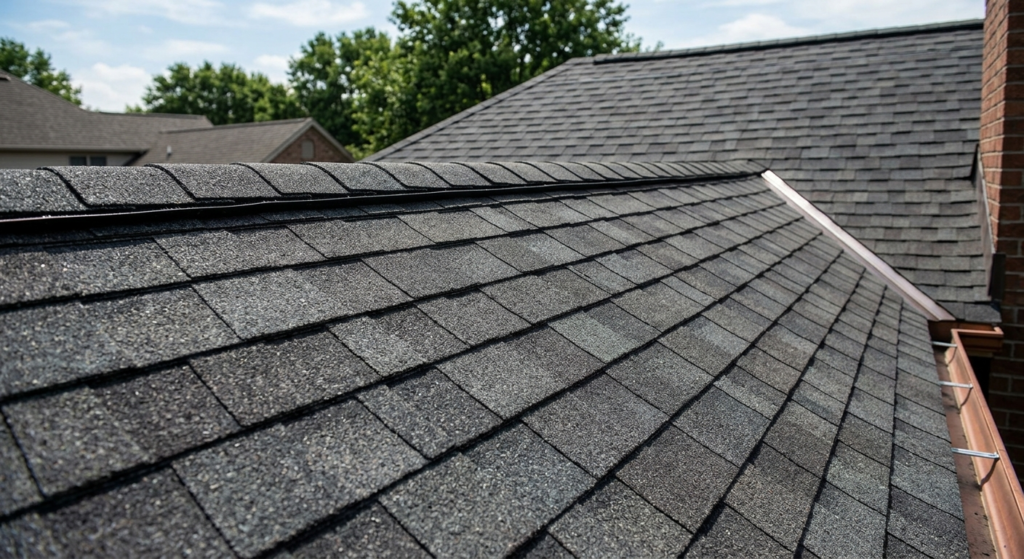
Architectural shingles, also known as dimensional or laminated shingles, use multiple layers to create a more dimensional appearance.
Unlike the relatively flat appearance of 3-tab shingles, architectural shingles can provide shadow lines and visual depth that resemble more expensive roofing materials.
They have become a popular choice for residential roofs because they provide a strong balance between appearance and performance.
Advantages
- Attractive dimensional appearance
- Wide range of colors and styles
- Good balance between cost and performance
- Broad availability
- Available with enhanced weather-resistance features
- Suitable for many residential roof designs
Disadvantages
- More expensive than basic 3-tab shingles
- Performance varies between products
- Heavier than some basic asphalt shingles
Best for
Most homeowners seeking a practical residential roofing solution.
Our recommendation
🏆 Best overall choice for most homeowners.
For a typical Lubbock home, architectural shingles are a strong starting point, especially when combined with appropriate underlayment, ventilation, flashing, and professional installation.
3. Luxury or Designer Shingles
Luxury shingles, sometimes called designer shingles, are premium asphalt products designed to provide a high-end appearance.
Many are manufactured to resemble natural slate, cedar shakes, or other premium roofing materials.
Advantages
- Premium appearance
- Strong dimensional character
- Wide variety of styles
- Can replicate the look of more expensive materials
- Suitable for upscale homes
Disadvantages
- Higher cost
- May not provide enough additional value for every homeowner
- Exact performance varies by manufacturer
Best for
Homeowners who want premium curb appeal without necessarily choosing natural slate or wood.
Our recommendation
🏆 Best premium asphalt option.
4. Impact-Resistant Asphalt Shingles
Impact-resistant shingles are designed and tested to provide enhanced resistance to impact.
This category deserves special attention in areas exposed to hail.
UL 2218 is a commonly referenced impact-resistance testing standard. The classifications range from Class 1 through Class 4, with Class 4 being the highest classification under that test.
However, a Class 3 or Class 4 rating should not be interpreted as a guarantee that a roof will never suffer hail damage.
Why impact resistance matters
Lubbock homeowners may want to consider impact-resistant products when severe weather and hail are major concerns.
The uploaded roofing material also emphasizes impact resistance as an important consideration for Lubbock homeowners.
Advantages
- Enhanced impact resistance
- Useful for hail-prone areas
- May provide insurance benefits depending on the insurer and policy
Disadvantages
- Can cost more than standard shingles
- Higher ratings don’t guarantee zero storm damage
- Insurance discounts vary
Best for
Homeowners who place a high priority on hail resistance.
Our recommendation
🏆 One of the most important asphalt-shingle categories to investigate for severe-weather areas.
5. Fiberglass Asphalt Shingles
Fiberglass shingles are a major category of modern asphalt roofing.
They use a fiberglass mat coated with asphalt and surfaced with mineral granules.
Fiberglass construction can be used in different asphalt shingle designs, including 3-tab and architectural products.
Advantages
- Common modern construction
- Lightweight compared with some traditional roofing materials
- Broad product availability
- Available across different price levels
Best for
Homeowners choosing modern asphalt roofing products.
6. Organic Asphalt Shingles
Organic asphalt shingles use an organic felt-based mat rather than fiberglass.
They were more common in older roofing systems and are far less prominent in modern residential roofing.
Advantages
- Historical use in asphalt roofing
- May be encountered on older roofs
Disadvantages
- Less common today
- Generally not the first choice for new residential roofing
Best for
Understanding older roofing systems rather than selecting a new roof.
7. Wood Shingles
Wood shingles provide a natural appearance that manufactured roofing products attempt to reproduce.
Cedar is one of the best-known materials used for wood roofing.
Advantages
- Natural appearance
- Unique character
- Works well with traditional architecture
- Can complement wood siding and natural materials
Disadvantages
- Requires maintenance
- Moisture management is important
- Fire requirements may affect where they can be used
- Installation can cost more than asphalt
Best for
Homeowners who prioritize natural materials and traditional appearance.
8. Wood Shake Shingles
Wood shakes are related to wood shingles but generally have a thicker and more textured appearance.
They can give a home a distinctive rustic appearance.
Advantages
- Premium natural appearance
- Strong architectural character
- Rustic style
- Can complement traditional homes
Disadvantages
- Higher cost
- More maintenance
- Requires appropriate installation
- Local fire and building requirements may apply
Best for
Rustic and premium architectural homes.
9. Cedar Shingles
Cedar shingles are a specific category of wood roofing.
They are valued for their natural grain, color, and weathered appearance.
Advantages
- Attractive natural appearance
- Traditional aesthetic
- Can complement wood and stone exteriors
Disadvantages
- Requires maintenance
- Can weather over time
- Moisture and ventilation need to be managed properly
Best for
Traditional homes where natural wood appearance is important.
10. Cedar Shake Shingles
Cedar shakes provide a more pronounced texture than many traditional cedar shingles.
They can create a distinctive handcrafted appearance.
Advantages
- High-end appearance
- Natural material
- Rustic texture
- Strong architectural character
Disadvantages
- Higher installation cost
- Maintenance requirements
- Environmental exposure can affect performance
Best for
Homeowners who want a premium natural wood appearance.
11. Natural Slate Shingles
Natural slate is a premium stone roofing material known for its exceptional potential longevity.
A properly installed slate roof can last for many decades, but the material is heavy and requires appropriate structural support and specialized installation.
Advantages
- Very long potential service life
- Premium appearance
- Natural material
- Excellent fire resistance
- Extremely durable
Disadvantages
- Expensive
- Heavy
- Requires specialized installation
- Structural requirements may apply
Best for
Premium homes where longevity and natural appearance are major priorities.
12. Synthetic Slate Shingles
Synthetic slate is engineered to reproduce the appearance of natural slate.
Depending on the product, it can provide a slate-like appearance while being lighter and easier to handle.
Advantages
- Slate appearance
- Generally lighter than natural slate
- Multiple color options
- Can be easier to handle and install
Disadvantages
- Product quality varies
- Not identical to natural stone
- Costs more than many standard asphalt shingles
Best for
Homeowners who want slate aesthetics without choosing natural slate.
13. Composite Shingles
Composite shingles are manufactured using engineered combinations of materials.
Some composite products are designed to imitate natural slate or wood shakes.
The uploaded article highlights composite roofing as an alternative for homeowners interested in premium durability and impact resistance.
Advantages
- Many appearance options
- Can replicate premium materials
- Good durability depending on product
- May require less maintenance than natural wood
Disadvantages
- Product quality varies
- Can be more expensive than standard asphalt
- Long-term performance depends on the specific product
Best for
Homeowners looking for an alternative to natural slate or wood.
14. Rubber Shingles
Rubber roofing shingles are made using rubber or rubber-based materials.
Some are designed to imitate slate or wood.
Advantages
- Flexible
- Some products provide strong impact resistance
- Can reproduce premium roofing appearances
- Specialty performance characteristics
Disadvantages
- Less common
- Availability varies
- Product costs vary considerably
Best for
Specialty roofing projects where an alternative material makes sense.
15. Metal Shingles
Metal shingles provide many of the durability advantages associated with metal roofing while maintaining a more traditional shingle appearance.
They may be manufactured from steel, aluminum, copper, or other metals.
Advantages
- Long potential lifespan
- Strong weather resistance
- Fire resistance
- Low maintenance
- Multiple design options
Disadvantages
- Higher upfront cost
- Specialized installation
- Expansion and contraction must be properly addressed
Best for
Homeowners prioritizing long-term durability and low maintenance.
16. Stone-Coated Steel Shingles
Stone-coated steel shingles combine a steel substrate with a protective stone coating.
They can provide a traditional appearance while offering many of the characteristics associated with metal roofing.
Advantages
- Durable
- Long service potential
- Traditional appearance
- Weather resistant
- Lighter than some tile and slate products
Disadvantages
- Higher initial cost than asphalt
- Requires experienced installation
- Product quality varies
Best for
Homeowners who want metal durability with a more traditional appearance.
17. Solar Shingles
Solar shingles combine roofing with photovoltaic technology.
Rather than installing conventional solar panels over a separate roof, solar shingles integrate electricity-generating technology into the roofing system.
Advantages
- Generates electricity
- Integrated appearance
- Can reduce reliance on grid electricity
- Combines roofing and solar technology
Disadvantages
- High upfront investment
- Specialized installation
- Not suitable for every roof
Best for
Homeowners specifically interested in integrated solar roofing.
18. Clay Tile Shingles
Clay tile is technically a tile rather than a traditional asphalt shingle, but it is often included in broad guides covering residential roofing materials.
Clay roofing can provide a distinctive appearance and long service life.
Advantages
- Long-lasting
- Attractive appearance
- Good heat and weather performance
- Low maintenance when properly installed
Disadvantages
- Heavy
- Expensive
- Structural considerations
- Individual pieces can break
Best for
Homes designed to support tile roofing.
19. Concrete Tile Shingles
Concrete tile provides another durable alternative to asphalt roofing.
It can be manufactured in different colors and profiles to complement various architectural styles.
Advantages
- Durable
- Long potential lifespan
- Fire resistant
- Many appearance options
Disadvantages
- Heavy
- More expensive than asphalt
- Structural requirements may apply
Best for
Homeowners looking for durable tile roofing.
20. Copper Shingles
Copper shingles are a premium roofing material known for their distinctive appearance.
Over time, copper naturally develops a patina that changes its appearance.
Advantages
- Very long potential service life
- Unique appearance
- Low maintenance
- Premium architectural character
- Corrosion resistance
Disadvantages
- Very expensive
- Specialized installation
- Not appropriate for every architectural style
Best for
High-end homes and distinctive architectural projects.
What Types of Roof Shingles Work Best in Lubbock?
Choosing among the types of roof shingles becomes more complicated when you consider Lubbock’s climate.
The uploaded article correctly emphasizes that local roofing decisions should account for wind, hail, UV exposure, temperature changes, and moisture conditions, rather than focusing only on appearance or price.
Hail Resistance
Hail should be one of the considerations when choosing roofing materials for a Lubbock home.
If you’re concerned about hail, ask your roofing contractor:
- What is the product’s impact classification?
- Has it been tested under UL 2218?
- Is it Class 3 or Class 4?
- Does the manufacturer provide specific impact-resistance documentation?
- Does your insurance company offer any applicable discount?
Don’t assume a Class 4 rating means the roof is guaranteed to survive every hailstorm.
Wind Resistance
Wind resistance depends on more than the shingle’s marketing label.
Installation details matter, including:
- Correct nail placement
- Proper fastening
- Starter shingles
- Sealant
- Underlayment
- Roof geometry
- Manufacturer installation requirements
Architectural shingles can offer stronger wind-performance specifications than some basic 3-tab products, but the exact manufacturer’s rating should always be checked rather than assuming every architectural shingle has the same rating.
Intense Sun and UV Exposure
Lubbock roofs receive significant sun exposure.
The uploaded article highlights solar reflectance as a consideration for homeowners evaluating roofing materials in West Texas.
When comparing products, look at the manufacturer’s technical information rather than choosing based only on color or shingle weight.
Roof ventilation is also an important part of the overall system.
Algae Resistance
Algae resistance may not be the first feature that comes to mind when choosing a roof for West Texas, but moisture conditions can still create staining.
Many modern asphalt shingles offer algae-resistant features.
If appearance is important to you, ask about the specific algae-resistance technology and warranty included with the product.
Complete Roofing System
One of the most important lessons from the source article is that homeowners should not evaluate shingles in isolation.
A roofing system includes:
- Shingles
- Underlayment
- Starter shingles
- Ridge caps
- Flashing
- Ventilation
- Fasteners
- Roof decking
- Installation workmanship
The uploaded article emphasizes the importance of system integrity and making sure the components work together.
A high-rated shingle cannot compensate for poor installation.
3-Tab vs Architectural Shingles: Which Should You Choose?
For homeowners comparing two of the most common asphalt options, the decision is relatively straightforward.
Choose 3-tab shingles if:
- Initial cost is your primary concern
- You prefer a simple appearance
- The product meets your project’s requirements
Choose architectural shingles if:
- You want a more dimensional appearance
- You want more design choices
- You want a more substantial modern asphalt shingle
- You’re willing to invest more in the roof
For many residential replacement projects, architectural shingles provide the better overall balance.
The source article also emphasizes the performance and appearance advantages of multi-layer architectural shingles compared with basic 3-tab products.
How Much Do Different Types of Roof Shingles Cost?
Roofing prices vary too much to give one universal price for every shingle type.
Your total project cost may include:
- Roofing materials
- Labor
- Tear-off
- Disposal
- Underlayment
- Flashing
- Starter shingles
- Ridge caps
- Ventilation
- Decking repairs
- Permits
- Roof complexity
That’s why you should compare complete roofing estimates, rather than comparing the cost of one bundle of shingles.
A cheaper shingle can still result in a more expensive project if the installation scope is different.
How Long Do Different Roof Shingles Last?
There is no single lifespan for each category.
Actual service life depends on:
- Material
- Product quality
- Climate
- Installation
- Ventilation
- Maintenance
- Roof slope
- Storm exposure
Generally, premium materials such as slate, copper, quality metal, and tile can offer very long service lives, while basic asphalt shingles generally have shorter expected service lives.
Manufacturer specifications should always take priority over generic lifespan estimates.
For additional information about extending the service life of an existing roof, see our roof maintenance guide.
What Should You Consider Before Choosing Roof Shingles?
Before selecting a product, consider these factors.
1. Climate
Think about the weather your roof actually experiences.
For Lubbock, that means considering:
- Hail
- Wind
- Heat
- Sun
- Temperature changes
- Heavy storms
2. Budget
Don’t choose a roofing material solely by the lowest initial price.
Consider the complete installation cost and expected service life.
3. Durability
Look at manufacturer-tested performance rather than relying on marketing descriptions.
4. Appearance
Choose a roof color and profile that complement your home’s:
- Brick
- Siding
- Stone
- Trim
- Windows
- Exterior finishes
5. Maintenance
Some roofing materials require more maintenance than others.
Natural wood, for example, generally requires more attention than many modern asphalt products.
6. Weight
Slate and tile can be significantly heavier than asphalt shingles.
Make sure your roof structure is appropriate for the selected material.
7. Warranty
Read the actual warranty documentation.
A “lifetime limited warranty” doesn’t mean every problem is covered indefinitely.
8. Contractor Experience
The contractor you hire can be just as important as the material you select.
Ask whether the installer has experience with the exact product you’re purchasing.
How to Choose the Right Type of Roof Shingle
If you’re still unsure, use this simple decision process.
Step 1: Set Your Budget
Determine whether you need a budget, mid-range, or premium solution.
Step 2: Identify Your Biggest Concern
Is your priority:
- Hail?
- Wind?
- Appearance?
- Longevity?
- Low maintenance?
- Energy generation?
Step 3: Choose a Material
For most homeowners, asphalt is the logical starting point.
For specialized needs, investigate metal, slate, synthetic, wood, tile, or solar options.
Step 4: Compare Performance
Look at:
- Wind rating
- Impact classification
- Fire classification
- Algae resistance
- Manufacturer requirements
Step 5: Compare the Complete Roofing System
Make sure the estimate includes:
- Shingles
- Underlayment
- Starter shingles
- Ridge caps
- Flashing
- Ventilation
- Labor
- Tear-off
- Disposal
Step 6: Compare Contractors
Don’t automatically choose the lowest estimate.
Ask what products will be used, who will perform the work, and what warranty applies.
Best Types of Roof Shingles by Category
After considering cost, durability, appearance, weather resistance, and maintenance, here’s our practical guide.
| Priority | Recommended Type |
| Best overall | 🏆 Architectural shingles |
| Best budget option | 3-tab shingles |
| Best premium asphalt | Luxury/designer shingles |
| Best for hail | Impact-resistant shingles |
| Best natural appearance | Cedar/wood shingles |
| Best rustic appearance | Wood shakes |
| Best potential longevity | Natural slate |
| Best slate alternative | Synthetic slate |
| Best alternative material | Composite shingles |
| Best long-term metal option | Metal shingles |
| Best traditional metal appearance | Stone-coated steel |
| Best integrated solar option | Solar shingles |
| Best premium metal | Copper shingles |
What Is the Best Type of Roof Shingle for Most Homes?
If you’re looking for one answer, architectural asphalt shingles are the best starting point for most homeowners.
They offer a practical combination of:
- Reasonable cost
- Attractive appearance
- Good durability
- Broad availability
- Multiple color options
- Numerous performance grades
- Familiar installation methods
For a Lubbock home, however, we’d take the decision one step further.
Look for a product that provides the weather-performance characteristics you need, and make sure the entire roof system is installed correctly.
If hail is your biggest concern, investigate impact-resistant products.
If maximum lifespan is your priority, look beyond asphalt at slate, metal, tile, or other premium materials.
If you’re primarily concerned about upfront cost, 3-tab shingles may be appropriate.
There is no single best roof shingle for every house. There is a best shingle for your home’s structure, climate, budget, and priorities.
Frequently Asked Questions About Types of Roof Shingles
The major categories include 3-tab asphalt shingles, architectural shingles, luxury shingles, wood shingles, wood shakes, slate, synthetic slate, composite, metal, solar, and tile-related roofing products.
What is the most common type of roof shingle?
Asphalt shingles are among the most widely used residential roofing materials. Within asphalt roofing, architectural shingles are a common choice for modern homes.
For many homeowners, architectural shingles offer a better combination of appearance and performance. However, 3-tab shingles can still make sense when upfront budget is the primary consideration.
Natural slate, copper, quality metal, and tile can provide very long service lives when properly installed and maintained.
Impact-resistant shingles are worth considering if hail is a major concern. Check the exact product’s impact classification rather than relying on a general brand claim.
Class 3 and Class 4 refer to classifications under UL 2218 impact-resistance testing. Class 4 is the highest classification under that test.
No. An impact-resistance classification does not guarantee that a roof will never be damaged by hail.
Look for products with appropriate manufacturer wind ratings and make sure they are installed according to the manufacturer’s requirements.
For many Texas homeowners, architectural asphalt shingles are a practical option. In hail-prone areas, impact-resistant products may also deserve consideration.
For a typical Lubbock home, we’d start with quality architectural asphalt shingles and then evaluate impact resistance, wind performance, algae resistance, ventilation, and the complete roofing system.
Final Verdict
There are many types of roof shingles, but homeowners don’t need to choose from every option equally.
For most residential projects, architectural asphalt shingles provide one of the best overall balances of cost, appearance, durability, and availability.
For a tight budget, consider 3-tab shingles.
For premium curb appeal, look at luxury or designer shingles.
For hail concerns, investigate impact-resistant products.
For maximum potential longevity, consider slate, metal, tile, or copper where appropriate.
For Lubbock homeowners, the decision should also account for the local combination of wind, hail, intense sun, temperature changes, and storm exposure. The source material emphasizes that these conditions should be considered together rather than focusing on a single specification.
Most importantly, don’t judge a roof by the shingle alone.
Underlayment, flashing, ventilation, fastening, decking, starter shingles, ridge caps, and workmanship all contribute to the performance of the finished roofing system.
If you’re planning a roof replacement or are unsure whether your existing roof needs repair or replacement, Elite Crown Roofing can evaluate the condition of your roof and help you compare appropriate roofing options for your Lubbock property.
The right roof isn’t simply the most expensive or highest-rated product. It’s the roofing system that best matches your home, your budget, and the conditions it will face for years to come.