
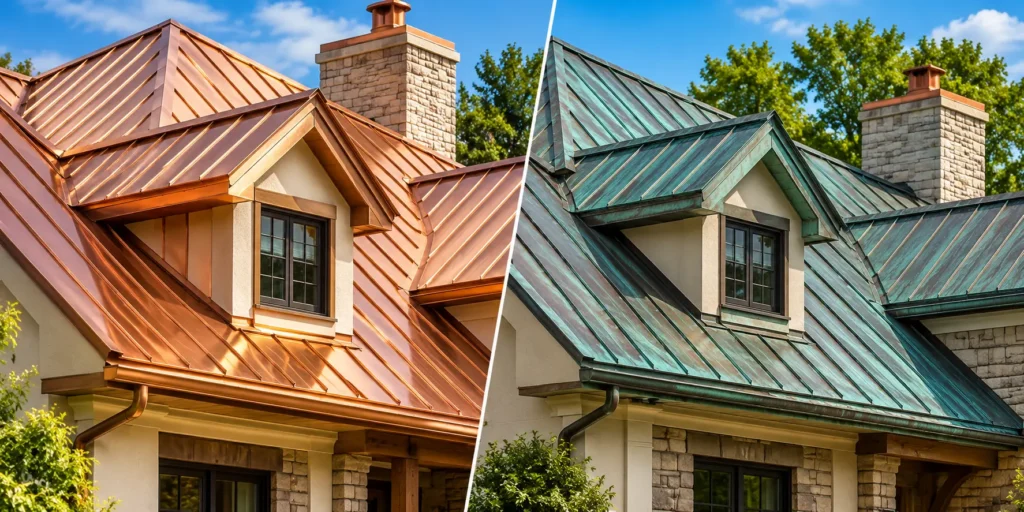
A weathered copper metal roof is more than a roofing material—it is an architectural feature that changes character over time. Unlike painted roofing products that are designed to maintain a relatively consistent finish, copper naturally reacts with the environment and develops a distinctive patina. The result can range from warm brown and bronze tones to the familiar blue-green appearance associated with aged copper roofs.
Weathered Copper Metal Roof: Best Answer
For homeowners who value long-term durability, distinctive appearance, natural weathering, and low routine maintenance, a weathered copper metal roof can be an excellent premium roofing choice. Copper roofing can develop a protective patina as it ages, and historic examples demonstrate its potential longevity. However, copper has a higher initial cost than many conventional roofing materials, so it makes the most sense when long-term performance and architectural appearance are priorities.
What Is a Weathered Copper Metal Roof?
A weathered copper metal roof is a roofing system made from copper sheets or panels that have been exposed to outdoor conditions long enough to develop a natural aged appearance.
New copper typically has a bright reddish-orange or metallic appearance. As the surface reacts with oxygen, moisture, and environmental conditions, its appearance gradually changes. The Metal Construction Association notes that natural copper roofing can be left unfinished because of the protective patina that naturally develops on the material.
This weathering process is one of the major reasons copper is used in architectural roofing.
Copper roofing can be installed in several forms, including:
- Standing seam panels
- Flat-seam copper panels
- Copper shingles
- Copper tiles
- Custom architectural copper details
- Copper flashing and roof accents
The appropriate system depends on the roof design, slope, climate, drainage requirements, and installation specifications.
How Does a Copper Metal Roof Become Weathered?
The copper metal roof weathering process occurs gradually rather than happening all at once.
When newly installed copper is exposed to the environment, its bright surface begins changing. Over time, oxidation and other chemical reactions alter the surface appearance.
A simplified progression may look like this:
- Bright reddish-orange copper
- Darker brown or bronze tones
- Deep brown or muted copper
- Blue-green or green patina
The exact appearance and rate of change depend on environmental conditions, including moisture, air quality, temperature, exposure, and the surrounding environment.
The Metal Construction Association explains that natural metal finishes can develop protective surface layers through weathering, while pre-weathered products can be manufactured to provide an aged appearance without waiting for the natural process.
How Long Does It Take for a Copper Roof to Develop a Patina?
There is no single timetable for every copper roof.
The answer to “how long does it take for a copper roof to weather?” depends heavily on the building’s location and environmental exposure. Moisture, temperature, atmospheric conditions, roof orientation, and surrounding structures can all influence the process.
Some copper roofs may develop noticeable color changes relatively quickly, while the complete development of a mature patina can take considerably longer.
The important point is that natural copper weathering is a gradual process. Homeowners choosing copper should expect the appearance to evolve rather than remain identical to the day it was installed.
Why Does Copper Roofing Turn Green Over Time?
One of the most recognizable characteristics of aged copper is its green or blue-green surface.
The reason copper roofing eventually turns green is related to the formation of corrosion products and surface compounds during prolonged environmental exposure. This is commonly referred to as copper patina.
The green patina seen on famous historic structures is part of the reason copper roofs can become architectural landmarks rather than simply functional building components.
For example, the Metal Construction Association has documented the copper roof at Grand Central Terminal, noting that its green patina became an important visual feature while the original roof remained serviceable for nearly a century before replacement during renovation.
Benefits of a Weathered Copper Metal Roof
There are several reasons property owners choose copper despite its premium price.
1. Distinctive Appearance
The biggest advantage is arguably the appearance.
A weathered copper roof develops a character that manufactured roofing finishes cannot perfectly reproduce. The changing colors can complement traditional, historic, modern, and high-end architectural styles.
2. Long-Term Durability
Copper is a durable architectural metal, and properly designed and installed copper roofing can provide exceptionally long service.
Historic examples demonstrate the potential. The original copper roof at Grand Central Terminal was installed in 1913 and was still considered serviceable almost a century later before renovation.
This does not mean every copper roof will automatically last 100 years. Roof design, installation quality, climate, drainage, detailing, and maintenance all matter.
3. Natural Patina
The natural patina is one of copper’s defining characteristics.
Rather than simply fading like a conventional painted surface, copper gradually develops a different appearance as it ages.
4. Low Routine Maintenance
Copper roofing does not require the same type of routine coating maintenance as some painted metal roofing products.
However, low maintenance does not mean no maintenance. Flashing, seams, drainage, roof penetrations, and surrounding components should still be inspected periodically.
5. Architectural Value
Copper can be especially appropriate for distinctive architectural projects where the roof itself is intended to contribute to the building’s character.
How Long Does a Weathered Copper Metal Roof Last?
The lifespan of a copper roof depends on much more than the metal itself.
Important factors include:
- Copper thickness and specification
- Roof design
- Installation quality
- Roof pitch
- Water drainage
- Flashing details
- Roof penetrations
- Climate
- Exposure to pollutants
- Maintenance
- Compatibility of adjoining materials
Historic copper roofs demonstrate that properly designed systems can have exceptionally long service lives. However, homeowners should avoid treating a historical example as a guaranteed lifespan for every modern installation.
The installation details are particularly important. The Metal Construction Association warns that incompatible materials and fasteners can contribute to corrosion problems in metal roof systems.
How Much Does a Weathered Copper Metal Roof Cost?
A weathered copper metal roof cost per square foot can vary substantially depending on the project.
Copper is generally considered a premium roofing material, so its upfront cost can be considerably higher than common asphalt roofing and many other metal options.
Your total project cost can depend on:
- Roof size
- Roof pitch
- Roof complexity
- Copper thickness
- Panel or seam design
- Existing roof removal
- Underlayment
- Flashing
- Roof penetrations
- Labor
- Access to the property
- Local building requirements
Because roofing prices change by region and project, homeowners should obtain a detailed estimate instead of relying on a generic online price.
The better question is often not simply “What does copper cost?” but “What value does copper provide over the expected life of the roof?”
Weathered Copper Metal Roof Maintenance Requirements
A weathered copper roof still deserves routine inspection.
A practical maintenance program should include:
- Checking roof seams
- Inspecting flashing
- Cleaning gutters and drainage paths
- Examining roof penetrations
- Looking for signs of water intrusion
- Checking surrounding materials
- Inspecting after severe weather
- Documenting developing problems
Elite Crown Roofing’s roof maintenance guide explains why regular inspections, flashing checks, drainage maintenance, and surface assessments are important components of a proactive roofing program.
For homeowners dealing with a localized problem, a partial roof repair may sometimes be appropriate instead of immediately replacing an entire roofing system.
Is a Weathered Copper Roof Good in Harsh Weather?
Copper roofing can be used in a wide range of climates, but the overall performance depends on the complete roofing assembly rather than the copper sheet alone.
Important considerations include:
- Proper drainage
- Correct flashing
- Secure seams
- Appropriate underlayment
- Proper roof ventilation
- Correct fasteners
- Adequate detailing around penetrations
- Local wind and snow requirements
The U.S. Department of Energy emphasizes that roof performance depends on factors including climate, insulation, roof construction, and the characteristics of the roofing surface.
Water management is particularly important. The Department of Energy’s Building Science Education resources identify roof penetrations and roof-to-wall intersections as vulnerable areas where proper flashing and sealing help prevent water intrusion.
Weathered Copper Roof vs Other Metal Roofing
Copper is only one option when selecting a metal roof.
| Feature | Copper | Aluminum | Steel |
|---|---|---|---|
| Natural patina | Excellent | Limited | Usually coated |
| Appearance | Premium | Modern | Wide variety |
| Initial cost | High | Moderate–high | Low–moderate |
| Corrosion resistance | Excellent | Excellent | Depends on coating |
| Maintenance | Relatively low | Low | Low–moderate |
| Design flexibility | Excellent | Excellent | Excellent |
| Long-term architectural appeal | Excellent | Very good | Very good |
The right material depends on your budget, architecture, climate, expected service life, and desired appearance.
Weathered Copper Roof vs Standing Seam Metal Roof
Comparing a weathered copper roof vs standing seam metal roof requires an important clarification: copper describes the material, while standing seam describes a roofing panel/profile system.
Copper can itself be fabricated into standing seam roofing.
A copper standing seam system can therefore combine:
- Copper’s natural appearance
- Concealed fastening
- Long continuous panels
- Clean architectural lines
- A developing natural patina
Standing seam roofing is also available in other metals, including steel and aluminum.
The Metal Construction Association identifies standing seam as one of the available metal roofing system types and notes that natural copper and zinc panels are often left unfinished because of their naturally occurring protective patina.
Weathered Copper Roof vs Aluminum Metal Roof
When comparing a weathered copper roof vs aluminum metal roof, the biggest differences are appearance, material characteristics, price, and weathering behavior.
Aluminum is lightweight and highly corrosion resistant, making it attractive for many applications. Copper, however, offers a distinctive natural aging process that many homeowners specifically want for architectural reasons.
If the primary goal is a unique evolving appearance, copper has a significant advantage.
If weight, budget, or a particular coated finish is more important, aluminum may be worth considering.
How to Maintain a Weathered Copper Metal Roof
Proper maintenance starts with regular observation rather than aggressive cleaning.
Recommended maintenance practices
Inspect the roof regularly: Look for loose components, damaged seams, unusual staining, or water-entry points.
Keep drainage clear: Gutters and roof drainage paths should remain free of leaves and debris.
Check flashing: Flashing around chimneys, walls, vents, skylights, and other penetrations deserves particular attention.
Inspect after major storms: High winds, falling branches, hail, and other events can damage roofing components.
Avoid unnecessary aggressive cleaning: The patina is part of the copper’s natural character, so homeowners should not assume that removing discoloration is desirable.
For broader maintenance guidance, see Elite Crown Roofing’s ultimate roof maintenance guide.
Is a Weathered Copper Metal Roof Worth It?
For homeowners who want the lowest possible upfront roofing cost, copper is unlikely to be the first choice.
But for someone who values long-term performance, distinctive architectural appearance, natural patina, durability, and low routine maintenance, a weathered copper metal roof can be worth the investment.
The strongest case for copper is when the roof is expected to remain part of the property’s architectural identity for decades.
Before making a decision, compare the complete installed cost, expected service life, maintenance requirements, warranty terms, roof design, and local climate—not just the price of the copper itself.
When Should You Choose Copper Roofing?
Copper may be worth considering when:
- You want a premium architectural roof.
- You like naturally weathered finishes.
- You want the roof to develop a unique patina.
- Long-term durability is important.
- You are renovating a historic or distinctive property.
- You want a roofing material that can become a visual feature.
- You are comfortable with a higher initial investment.
If you are uncertain whether copper is appropriate for your roof, a professional inspection and material assessment can help you compare realistic options. Elite Crown Roofing provides roof installation, repair, inspection, and replacement services for homeowners evaluating their roofing needs.
Frequently Asked Questions
How long does a weathered copper metal roof last?
A properly designed and installed copper roof can have an exceptionally long service life. Historic examples demonstrate that copper roofing can remain functional for many decades, but actual longevity depends on installation, climate, drainage, materials, and maintenance.
How long does it take for a copper roof to develop a patina?
There is no universal timeline. Copper gradually changes from its original bright appearance through darker tones and eventually toward a mature patina. Environmental exposure has a major influence on the rate.
Why does a copper roof turn green?
Copper reacts with oxygen, moisture, and environmental conditions over time. The resulting surface compounds create the familiar green or blue-green patina associated with aged copper roofing.
Does a weathered copper roof require maintenance?
Yes. Copper generally requires relatively low routine maintenance, but inspections, drainage maintenance, flashing checks, and attention to penetrations remain important.
How much does a weathered copper metal roof cost?
The price depends on the copper specification, roof size, complexity, labor, installation method, existing roof condition, and local market. A professional estimate is more reliable than a generic national price.
Can you restore the appearance of a weathered copper roof?
The answer depends on the condition and the desired appearance. Because natural patina is part of copper’s normal aging process, cleaning or altering the surface should be approached carefully and professionally.
Is copper roofing good for heavy rain?
Copper can be used in rainy climates, but water management is critical. Proper roof slope, seams, flashing, underlayment, drainage, and penetration detailing are essential to long-term performance.
Final Verdict
A weathered copper metal roof offers something few other roofing materials can: a surface that naturally changes and develops character over time while potentially providing exceptional long-term service. Its distinctive patina, architectural appeal, durability, and relatively low routine maintenance make it a premium roofing option.
The trade-off is the higher initial investment. Copper is best suited to homeowners who are thinking beyond the immediate installation price and want a roof that can contribute to the property’s appearance and performance for decades.
The quality of installation matters just as much as the material. Proper flashing, drainage, compatible fasteners, roof detailing, and regular inspections should all be part of the decision.
If you’re considering copper roofing, compare the material, installation method, expected lifespan, maintenance needs, and total long-term value before choosing your final roofing system.