
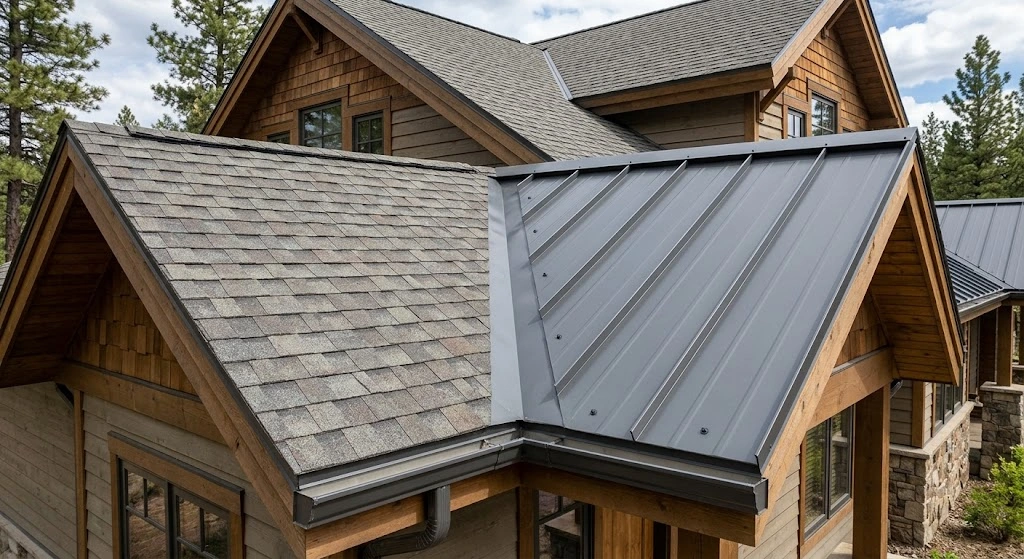
Mixing metal and shingle roofing is a practical way to combine different roofing materials on one house. Homeowners often choose a metal roof for a porch, garage, or architectural feature while keeping asphalt shingles on the main roof. This approach can create visual contrast, help manage renovation budgets, and allow different roof sections to use materials suited to their design.
However, combining metal roofing and shingles requires more than choosing two materials that look good together. Roof slope, drainage, flashing, structural support, and the transition between the two systems all affect long-term performance.
If you are planning a roof replacement, building an addition, or updating your home’s exterior, understanding these details will help you decide whether a mixed roofing system is right for your property.
Can You Mix Metal Roofing and Shingles on One House?
Yes. Metal roofing and asphalt shingles can be installed on different sections of the same house when the roof design, materials, and connections are properly planned.
For example, a homeowner might install standing seam metal roofing over a front porch while retaining asphalt shingles on the main roof. Another option is to use metal roofing on a garage addition or selected dormers to create an architectural accent.
The key is to treat the roof as one coordinated water-management system. Each material has its own installation requirements, and the junction between them must direct water safely toward the gutters or other appropriate drainage points.
Before choosing a design, consider the following:
- Roof geometry: The pitch, height, and orientation of each section determine how the materials can connect.
- Water drainage: Runoff from an upper roof section must not overwhelm or enter the lower roof assembly.
- Material compatibility: Flashing, fasteners, underlayment, and adjacent metals must be suitable for the selected systems.
- Appearance: Metal color, shingle color, trim, siding, and architectural style should work together.
- Budget: A mixed roof may reduce the amount of metal required, but additional flashing and detailing can affect installation costs.
A professional assessment can help establish whether the planned transition is feasible before materials are ordered.
Popular Metal and Shingle Roof Combination Ideas
The best combination depends on your home’s architecture and which sections need a different roofing material.
1. Metal Roofing on a Porch and Shingles on the Main Roof
One of the most common designs uses asphalt shingles on the main roof and standing seam metal panels over the front porch or covered entry.
The metal section creates a visual accent without requiring the entire house to have a metal roof. A charcoal, black, or bronze finish can complement neutral shingles, stonework, and exterior trim.
This option works best when the porch roof has suitable geometry and the connection to the main roof can be properly flashed.
2. Metal Roofing on a Garage or Home Addition
A garage, workshop, or home addition may have different structural and design requirements from the original house. Using metal on the new section while retaining shingles on the existing roof can create a practical distinction between the two areas.
However, the new roof must connect correctly to the existing structure. The contractor should inspect the existing roof, establish how water will drain at the junction, and determine whether the addition requires changes to framing or flashing.
3. Metal Roofing on Dormers or Architectural Features
Metal roofing can also highlight dormers, bay-window roof sections, or other architectural features. This approach introduces texture and contrast without changing the entire roof.
Smaller roof sections can have complicated valleys and wall intersections, so the design should account for water drainage and the installation requirements of both materials.
4. Metal Roofing on a Low Porch Roof
Some homeowners prefer metal roofing on a porch or another roof section that differs in slope from the main shingle roof.
Not every metal panel is suitable for a low-slope application. The minimum slope depends on the particular panel profile and roofing system. Confirm the manufacturer’s requirements before selecting a product, and make sure the transition detail is designed for the actual roof geometry.
How to Transition from a Metal Roof to Shingles
The transition between metal panels and asphalt shingles is one of the most important parts of a mixed-material roof.
A poorly designed junction can allow water to collect, travel beneath the roofing, or enter the roof deck. The correct detail depends on whether the two sections meet at a sidewall, valley, change in roof height, or another intersection.
Step 1: Determine the Roof Layout
The contractor should identify where the metal and shingle sections meet, which section sits higher, and how water will flow across the roof.
A transition that works for a metal porch roof meeting a shingle-covered main roof may not be appropriate for a valley or a wall intersection.
Step 2: Select Compatible Underlayment and Flashing
The roofing assembly needs appropriate underlayment, flashing, and edge details. These components should be compatible with the metal panel system and asphalt shingles.
The exact flashing arrangement should follow the selected roofing manufacturer’s installation instructions and applicable building codes.
Step 3: Manage Water at the Junction
The transition must direct runoff over the appropriate weather-shedding surfaces instead of allowing water to enter beneath either material.
Depending on the geometry, the detail may require formed metal flashing, a properly designed transition piece, or a valley assembly. There is no single flashing detail that works for every metal-to-shingle connection.
Step 4: Account for Roof Movement
Metal panels can expand and contract as temperatures change. Their attachment and flashing details must accommodate the movement allowed by the system’s design.
A rigid connection or incompatible sealant arrangement can create problems if it restricts movement or deteriorates over time.
Step 5: Inspect the Finished Connection
Before considering the job complete, inspect the flashing, panel edges, shingle courses, fasteners, and drainage paths. Particular attention should be given to areas where water concentrates or changes direction.
For additional technical background, the National Roofing Contractors Association’s roofing guidelines provide resources on roof-system design, materials, and installation practices.
How Much Does It Cost to Combine Metal Roofing and Shingles?
The cost of mixing metal and shingle roofing varies with the size of each section, the selected products, roof complexity, and labor requirements.
Using metal on a small porch or garage roof may cost less overall than replacing the entire house with metal panels. However, a mixed system is not automatically cheaper because the transition details may require additional labor and custom flashing.
The main cost factors include:
- Metal roofing type: Standing seam systems generally have different material and installation costs from exposed-fastener panels.
- Shingle selection: Standard architectural shingles and premium products have different prices.
- Roof size and complexity: Dormers, valleys, wall connections, and multiple roof heights can increase labor.
- Existing roof condition: Removing old materials or repairing damaged decking adds to the project.
- Flashing and accessories: Custom transitions and compatible components affect the final estimate.
- Labor and access: Roof height, pitch, accessibility, and local labor rates influence installation costs.
For an accurate comparison, request an itemized estimate covering both roofing materials, removal, underlayment, flashing, decking repairs, disposal, and warranties.
If you are evaluating whether to replace your existing roof, see our guide to recognizing when your roof needs replacement.
Benefits of Mixing Metal and Shingle Roofing
Improved Design Flexibility
Combining materials allows homeowners to create contrast between the main roof and selected architectural features. Metal can provide a modern accent, while shingles maintain a familiar appearance across larger roof sections.
Control Over Material Costs
Using metal only where it is most desirable can reduce the total quantity of metal panels required. The actual savings depend on the size of the metal section and the cost of additional transition work.
Different Materials for Different Roof Sections
A garage, porch, addition, or dormer may have different design requirements from the main roof. A mixed system allows each section to use a suitable product, provided the materials are compatible with the overall roof design.
Retaining a Serviceable Existing Roof
If the main shingle roof remains in good condition, a homeowner may be able to install metal roofing on a new addition without replacing every existing roof section.
This decision should follow an inspection of the old roof and a review of how the new construction will connect to it.
Potential Problems with Mixed Metal and Shingle Roofs
Combining roofing materials can work well, but several problems deserve attention before installation.
Leaks at the Transition
The junction between the two materials is a potential weak point if flashing is incorrectly installed or water is directed beneath the roofing. Proper detailing matters more than simply applying sealant to the visible joint.
Uneven Roof Heights
Different roofing assemblies can have different thicknesses and profiles. If the transition is not planned, the junction may look unfinished or create drainage difficulties.
Incompatible Materials
Some metals and other building materials can contribute to corrosion when they are not compatible in the given environment. Fasteners, flashing, and panel materials should be selected as a coordinated system.
Different Maintenance Requirements
Metal roofing and asphalt shingles have different inspection and maintenance needs. The metal section may require attention to seams, coatings, flashing, and panel movement, while the shingle section may need checks for damaged, loose, or missing shingles.
Warranty Complications
Installing a new roofing section beside an existing roof can raise questions about workmanship coverage and material warranties. Ask each manufacturer and contractor how the proposed transition affects warranty requirements before work begins.
For further guidance, review our article on roof maintenance in harsh weather conditions.
Is Mixing Metal and Shingle Roofing Suitable for Lubbock, Texas?
For homeowners in Lubbock and across West Texas, roof selection should account for wind, hail, intense sunlight, and substantial temperature changes.
A mixed metal and shingle roof may be appropriate, but performance depends on the specific products and the quality of the complete installation.
When comparing systems, ask about:
- Wind-uplift ratings and attachment requirements for the roof design.
- Hail resistance and the limitations of the roofing product’s warranty.
- Metal coatings and compatibility with the local environment.
- Drainage and flashing at every material transition.
- Maintenance requirements and the availability of replacement materials.
Metal roofing is not automatically hail-proof, and asphalt shingles also vary in their impact resistance. Evaluate the documented performance of the actual products rather than assuming that one material always provides better protection.
For more advice, explore our guide to preparing your roof for extreme weather.
Common Mistakes to Avoid
A successful mixed roofing project starts with a coordinated design rather than separate decisions about each material.
Avoid these common mistakes:
- Choosing metal panels without checking the minimum permitted roof slope.
- Connecting the two materials with generic flashing that does not suit the roof geometry.
- Ignoring drainage from an upper roof onto a lower section.
- Restricting the thermal movement of metal panels.
- Assuming a new roof section can be attached without inspecting the existing roof.
- Overlooking warranty requirements or applicable building codes.
- Selecting materials based only on color or initial price.
If the roof includes complex valleys, multiple roof heights, or unusual connections, have the transition detail reviewed before installation begins.
Frequently Asked Questions
Can you put a metal roof over part of a shingle roof?
Yes, separate sections of the same building can use different roofing materials. The metal panels and shingles must be installed on their respective roof sections using compatible details, suitable support, and properly designed transitions.
Is a metal roof with shingles cheaper than a full metal roof?
It can be, particularly when the metal section is small. However, the total cost depends on material prices, roof complexity, and transition labor. Compare complete installation estimates rather than material prices alone.
Can a metal roof leak where it meets shingles?
Yes. Poorly installed flashing, incorrect drainage, incompatible materials, or movement-related problems can allow water to enter at the junction. Correctly designed flashing and installation are essential.
Which looks better: metal roofing with shingles or an all-metal roof?
This is a matter of architectural style and personal preference. Mixed roofing can add contrast and highlight selected features, while an all-metal roof creates a more consistent appearance. Consider the house’s exterior colors, roof shape, and surrounding architecture.
Do metal roofing and asphalt shingles require different maintenance?
Yes. Both materials need periodic inspection, but the specific checks differ. Metal systems require attention to panel seams, flashing, coatings, and attachment details, while shingles should be checked for damage, deterioration, and missing pieces.
Conclusion
Mixing metal and shingle roofing can be an effective way to combine architectural style, material flexibility, and budget considerations. Popular applications include metal porch roofs, garage sections, dormers, and home additions paired with asphalt shingles on the main roof.
The most important factor is the transition between the materials. Proper flashing, drainage, compatible components, and attention to metal panel movement help protect the entire roofing assembly.
Before committing to a mixed roof, have the existing structure and proposed design evaluated by a qualified roofing contractor. A well-planned installation can provide the desired appearance without compromising the roof’s ability to manage water and withstand local weather.