
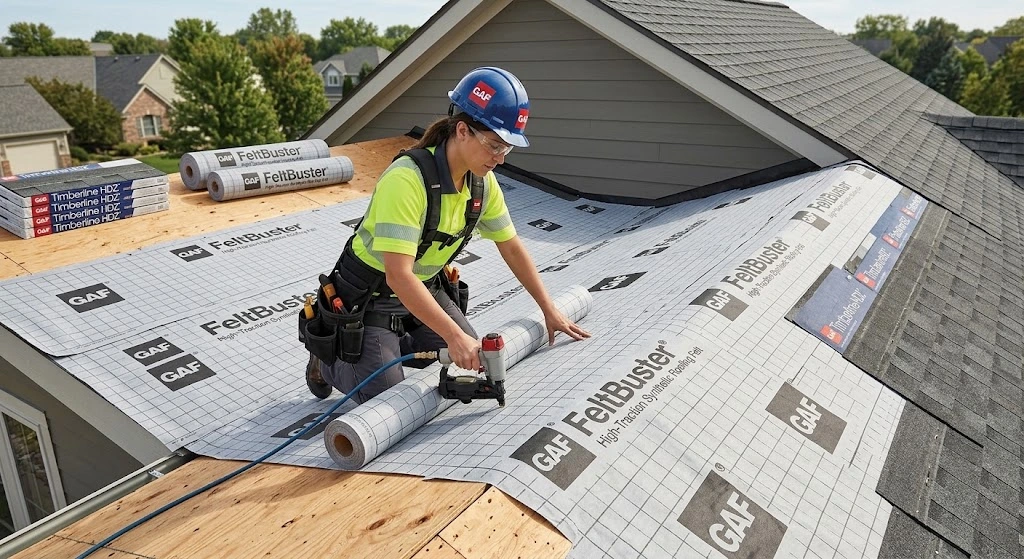
Choosing the best underlayment for a flat roof is one of the most consequential decisions you will make in protecting your property. Unlike pitched roofs where water sheds quickly, flat roofs are vulnerable to ponding water, prolonged UV exposure, and the constant stress of freeze-thaw cycles. The underlayment—the layer installed between your roof deck and the final waterproofing membrane—serves as your secondary water barrier and determines whether your roofing system delivers its full lifespan or fails prematurely. This guide breaks down the best underlayment options for flat roofs, compares materials, installation methods, costs, and helps you make an informed decision for your property.
What Is the Best Underlayment for a Flat Roof? (Best Answer)
The best underlayment for a flat roof is a self-adhering modified bitumen membrane, specifically an SBS-modified bitumen underlayment with fiberglass reinforcement. This material outperforms traditional felt and standard synthetic options because it creates a fully bonded, waterproof barrier that seals around fasteners, resists puncture damage from foot traffic, maintains flexibility in freezing temperatures, and provides a reliable secondary defense against ponding water. For most flat roof systems—whether built-up roofing, torch-down, or single-ply membranes—a self-adhered SBS base sheet offers the optimal balance of durability, waterproofing capability, and long-term value.
Why Flat Roof Underlayment Is Different from Pitched Roof Underlayment
Traditional asphalt-saturated felt, commonly called “tar paper,” was designed for steep-slope roofs where water runs off rapidly. Placing standard #15 felt under a flat roof membrane is a recipe for premature failure. In cold climates, felt can crack like glass, leaving your membrane sitting on a fractured substrate that deteriorates with every freeze-thaw cycle. Flat roofs demand underlayment that is genuinely waterproof, not merely water-resistant.
The distinction matters because flat roofs must contend with:
- Ponding water that sits on the surface for extended periods
- UV exposure that degrades lesser materials before the final membrane is installed
- Foot traffic during installation and maintenance
- Thermal movement that stresses adhesives and seams
Understanding this difference is the first step toward selecting the right product. According to the National Roofing Contractors Association, proper underlayment selection is critical for low-slope roof performance and should always follow manufacturer and code requirements.
Types of Flat Roof Underlayment
1. Self-Adhering Modified Bitumen (SBS) — The Gold Standard
Self-adhered peel-and-stick membranes are widely regarded as the top-tier underlayment for low-slope projects. Products like Soprema Lastobond and Grace Ice & Water Shield have become industry benchmarks for flat roof protection. These membranes use SBS (styrene-butadiene-styrene) modified bitumen, which retains excellent flexibility under ambient temperature fluctuations, enhancing system longevity.
Key advantages include:
- Fully bonded waterproofing that prevents lateral water migration
- Self-sealing around fasteners, plugging holes that would otherwise leak
- Flame-free installation, reducing fire risk during application
- Puncture resistance for roofs that see maintenance foot traffic
For built-up roofing systems, a self-adhering polymer modified bitumen underlayment complying with ASTM D1970 is often specified as the required base layer.
2. Torch-On SBS Underlayment
Torch-applied SBS underlay is a fully bonded, glass fibre reinforced membrane that is heat-fused to the roof deck. This method creates an exceptionally strong bond and is widely used in commercial and residential flat roofing. However, torch-on installation introduces fire risk and requires a skilled, certified applicator. It is less suitable for DIY projects or roofs near combustible materials.
3. Rubberized Asphalt Underlayment
Rubberized asphalt underlayment, also known as self-adhered underlayment, is made of asphalt and rubber polymers with a sticky backing that adheres directly to the roof deck without fasteners. It is the most waterproof of the three main categories—felt, synthetic, and rubberized asphalt—and provides the highest level of protection against roof leaks and extreme temperatures.
The trade-offs are higher cost and less coverage per roll compared to synthetic options.
4. Synthetic Underlayment
Synthetic underlayment made from woven polypropylene or polyethylene is lightweight, tear-resistant, and offers excellent UV resistance. It can withstand prolonged exposure without wrinkling or breaking down and is safer to walk on due to slip-resistant surfaces. However, synthetic underlayment is primarily designed for steep-slope roofing. On a flat roof, it is better suited as a temporary weather barrier during construction rather than as a permanent base sheet beneath a membrane.
5. Fibreglass-Reinforced Felt (BUR Workhorse)
Fibreglass-reinforced felts remain a staple in built-up roofing systems. They are cost-effective and compatible with hot-applied asphalt, but they lack the self-sealing and waterproofing advantages of modified bitumen products.
Comparison Table: Flat Roof Underlayment Options
| Material | Waterproofing | Lifespan | Cost per Sq Ft | Best For |
|---|---|---|---|---|
| Self-Adhered SBS Modified Bitumen | Excellent | 25–30 years | $0.75–$2.00 | Most flat roof systems |
| Torch-On SBS Underlayment | Excellent | 20–30 years | $0.50–$1.50 | Commercial flat roofs |
| Rubberized Asphalt | Excellent | 25–35 years | $1.00–$3.00 | Extreme climates, maximum leak protection |
| Synthetic Underlayment | Good (water-resistant) | 25–35 years | $0.15–$0.55 | Temporary protection, steep-slope only |
| Fibreglass-Reinforced Felt | Moderate | 10–25 years | $0.05–$0.50 | Budget BUR systems |
Installation Considerations for Flat Roof Underlayment
Proper installation is as important as material selection. Key steps include:
- Surface preparation: Clean the deck and repair gaps or cracks. Apply a bitumen primer to increase adhesion of the membrane.
- Lap sealing: Ensure side laps of 75mm and end laps of 100mm, pressure-rolling to remove entrapped air pockets.
- Self-adhered application: Peel back the release film incrementally and press the membrane into place using a weighted roller.
- Avoid mechanical fasteners on synthetic products: Capped nails are mandatory for synthetic felt because water can wick through standard fastener holes.
Once your flat roof underlayment is installed, scheduling regular professional maintenance is essential. Elite Crown Roofing’s proactive roof maintenance programs include detailed inspections that catch underlayment and membrane issues before they become costly repairs.
Cost of Flat Roof Underlayment
Material costs vary significantly by type. Standard underlayment felt ranges from $0.25 to $0.75 per square foot, while higher-quality specialized products can reach $1.50 to $3.50 per square foot for materials alone. Professional installation adds roughly $3.00 to $7.50 per square foot depending on surface preparation and complexity.
For a typical flat roof, investing in a premium self-adhered modified bitumen underlayment upfront can prevent the far greater expense of premature membrane failure. If you are facing an urgent roofing issue, understanding the cost of emergency roof repair can help you plan accordingly.
Common Mistakes to Avoid
- Using standard #15 felt under a flat roof membrane: This is the single most common cause of premature flat roof failure.
- Skipping the primer: Adhesion failure leads to delamination and water infiltration.
- Inadequate laps: Water will find any gap. Always follow manufacturer specifications.
- Ignoring compatibility: Some membranes and underlayments are chemically incompatible and require a separation layer.
When to Call a Professional
While some homeowners may attempt small flat roof repairs, underlayment selection and installation require expertise in material compatibility, building codes, and local climate demands. A certified roofing contractor can assess your specific roof system and recommend the underlayment that will perform best for your situation. Elite Crown Roofing provides comprehensive flat roof services, from signs you need a roof replacement to full system installations.
Frequently Asked Questions
Can I use synthetic underlayment on a flat roof?
Synthetic underlayment can serve as a temporary weather barrier on a flat roof during construction, but it is not recommended as the permanent base sheet beneath a membrane on a true flat roof. Self-adhered modified bitumen is the superior choice.
How long should flat roof underlayment last?
A properly installed self-adhered SBS modified bitumen underlayment should last 25 to 30 years, matching or exceeding the lifespan of the membrane above it. Felt underlayments typically last 10 to 25 years.
Do I need underlayment on a flat roof with a rubber membrane?
Yes. Even with an EPDM rubber membrane, a base sheet or underlayment provides a secondary water barrier and protects the membrane from deck irregularities and fastener back-out.
What is the best underlayment for a flat roof with ponding water?
Self-adhering modified bitumen or rubberized asphalt underlayment is best for roofs with ponding water because these materials are fully waterproof and create a continuous, bonded barrier that resists water migration.
Conclusion
The best underlayment for a flat roof is a self-adhering SBS-modified bitumen membrane. It delivers the waterproofing, durability, and long-term reliability that flat roofs demand—qualities that felt and standard synthetic products simply cannot match in a low-slope application. By understanding your material options, prioritizing proper installation, and working with experienced roofing professionals, you can protect your flat roof investment for decades to come.
For expert guidance on flat roof underlayment selection and installation in your area, contact Elite Crown Roofing for a professional assessment.